Why Is My Truck Overheating? Diesel Causes
Why is my truck overheating? Learn the diesel cooling-system faults that cause heat, the roadside checks to make, and when to stop before engine damage.
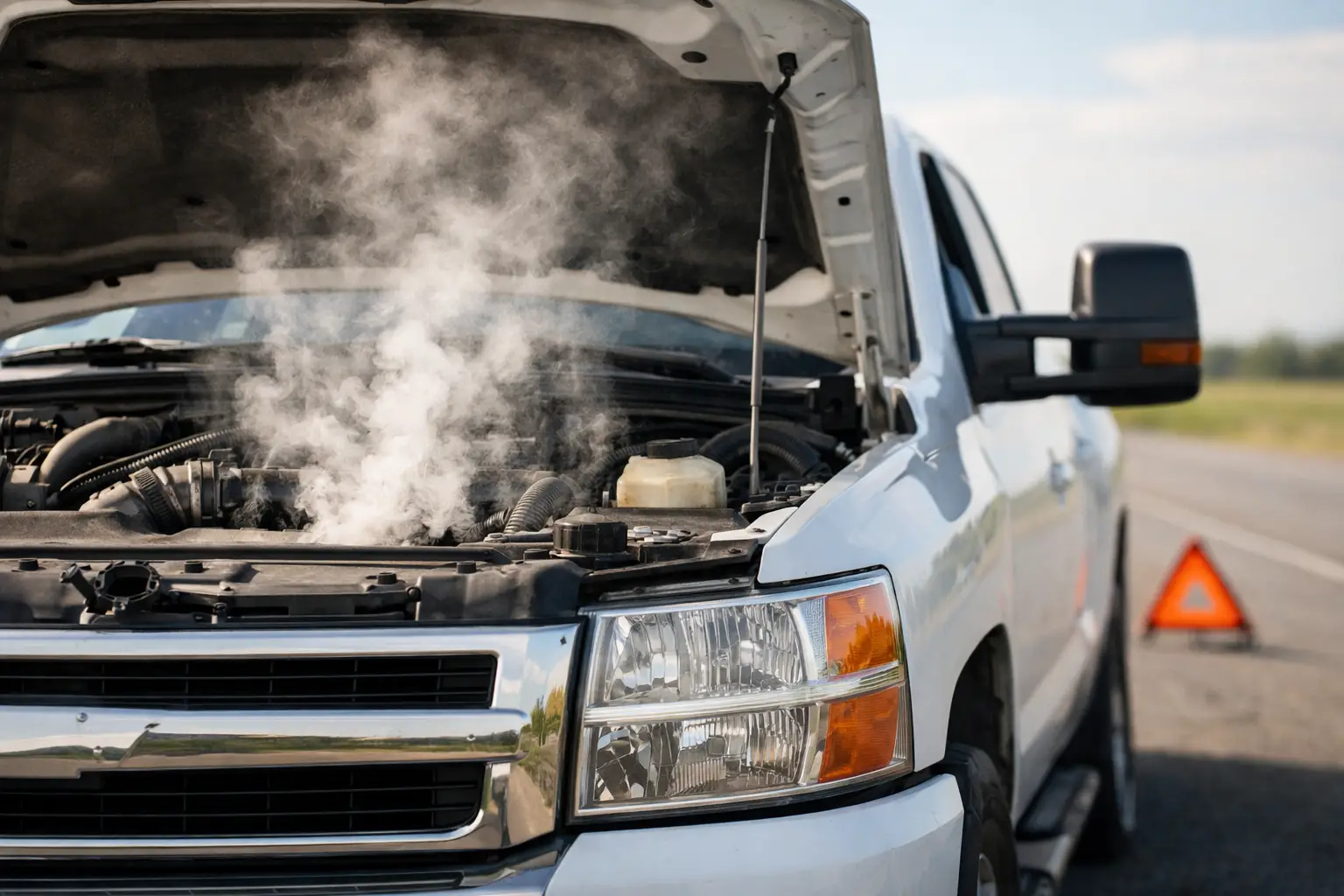
A rising temperature gauge on a loaded diesel is not a warning to push through until the next exit. It is a warning that the engine is losing its ability to control heat. If you are asking, why is my truck overheating, treat it as an active mechanical problem. Continued operation can turn a hose, sensor, or airflow issue into warped components, a failed head gasket, damaged aftertreatment hardware, or a truck that cannot complete the run.
For commercial drivers and fleet operators, the goal is simple: protect the engine, identify what changed, and get accurate diagnostics before a minor cooling-system failure becomes major downtime.
Why Is My Truck Overheating? Start With the Conditions
The circumstances around the high-temperature event narrow down the likely cause. A truck that runs hot only while climbing grades, pulling heavy, idling in summer traffic, or operating with the A/C on may have an airflow, fan, radiator, or load-related issue. A truck that overheats quickly under normal cruising conditions may have low coolant, a circulation problem, or a more serious internal fault.
Watch the gauge trend, not just the highest number. Does the temperature climb steadily under load and fall when you reduce throttle? Does it spike quickly after startup? Does it rise at idle but improve at highway speed? Those details matter to a diesel technician and can reduce diagnostic time on the roadside.
Do not assume a gauge reading is automatically a bad sensor. Sensors and wiring can fail, but the cooling system must be checked before calling an overheating event an electrical issue. A scan tool can compare reported coolant temperature with other operating data and help confirm whether the engine is truly overheating.
The Most Common Diesel Overheating Causes
Low Coolant or an External Leak
Coolant loss is one of the most common reasons a heavy-duty truck starts running hot. A leak may come from a radiator seam, hose, clamp, water pump, surge tank, EGR cooler circuit, heater line, fitting, or a damaged connection. Some leaks only show up when the system is hot and pressurized, so an apparently dry engine bay does not clear the cooling system.
Low coolant creates air pockets and reduces the system's capacity to transfer heat. You may notice an intermittent temperature rise, weak cab heat, coolant odor, visible residue, or a low level in the surge tank after the engine cools. Never remove a hot coolant cap. Pressurized coolant can cause severe burns.
Restricted Radiator, Charge Air Cooler, or Condenser Airflow
Texas heat exposes every weakness in a cooling stack. The radiator depends on airflow, and the front of that stack can collect dust, bugs, road debris, oil residue, and other material that blocks heat transfer. On many trucks, the charge air cooler and A/C condenser sit in front of the radiator, so a restriction at the front can prevent the radiator from doing its job even when it looks acceptable from one side.
External debris is not the only concern. A radiator can also have internal restrictions from contaminated coolant, corrosion, improper coolant mixing, or neglected maintenance. A restricted radiator may cool adequately during light use but lose control of temperature when the truck is loaded or working a grade.
Fan Clutch or Fan Drive Failure
If the temperature climbs at idle, in slow traffic, during a parked regeneration, or with the A/C operating, inspect the cooling fan system. A mechanical fan clutch may fail to engage fully. An electronically controlled fan drive may have a wiring, air-control, command, or mechanical issue. Hydraulic fan systems have their own failure points.
The fan should move a high volume of air when commanded on. A fan that freewheels, engages late, or does not reach proper speed cannot pull enough air through the cooling stack. This is a common roadside diagnosis because the truck may appear normal at highway speed, where natural airflow masks the fan problem.
Thermostat, Water Pump, or Coolant Circulation Problem
The thermostat regulates coolant flow through the engine and radiator. If it sticks closed or does not open fully, heat stays trapped in the engine. A failing water pump, worn impeller, slipping drive component, or belt problem can also reduce coolant circulation.
These issues can produce a fast temperature rise, inconsistent heater performance, or a condition where the upper and lower radiator hoses show an abnormal temperature difference. Proper diagnosis requires more than replacing parts based on the gauge. Technicians verify coolant level, pressure, circulation, temperatures, fault codes, and the operating condition of related components.
EGR Cooler, Combustion Gas, or Internal Engine Problems
Not every overheating problem begins at the radiator. A failed EGR cooler, combustion gases entering the cooling system, or an internal engine issue can pressurize the system, force coolant out, or create heat beyond what the cooling system can manage.
Warning signs include repeated coolant loss with no obvious external leak, bubbling in the surge tank, excessive pressure after a cold start, white exhaust, coolant contamination, or overheating that returns immediately after a basic repair. These conditions need shop-level diagnostic capability, even when the inspection begins at the roadside. Continuing to run the truck can substantially increase the repair scope.
DPF Regeneration and Excessive Heat Load
A regeneration event raises exhaust temperatures by design, but it should not cause the engine coolant temperature to run away. If a truck overheats during a parked regen, heavy idle time, or a high-load operating cycle, the regen may be exposing an underlying airflow or fan problem.
Aftertreatment faults, engine derates, fan-command issues, and cooling-system weaknesses can overlap. That is why diesel diagnostics should review fault codes and live data from both engine and emissions systems instead of treating the temperature gauge as an isolated problem.
What to Do When the Temperature Starts Climbing
The right response depends on how quickly the temperature rises and whether you have warning lights, steam, coolant loss, or derate messages. Reduce engine load as soon as it is safe. Turn off the A/C if necessary, avoid hard acceleration, and move to a safe location before the warning becomes a shutdown event.
If the gauge keeps climbing, steam is present, coolant is leaking, or the engine enters a severe derate, shut the truck down. Do not keep running it to finish a delivery. The time saved is rarely worth the risk of cylinder-head, gasket, turbocharger, or aftertreatment damage.
After the engine has cooled, a driver can safely document the basics without opening a pressurized system: note the gauge reading, warning messages, recent repairs, visible leaks, coolant level in the surge tank if accessible, and whether the fan was operating. Photos of the leak area, dash warnings, and coolant residue can help the technician arrive prepared.
Avoid these roadside mistakes:
- Do not remove the coolant cap while the engine is hot.
- Do not pour cold water into an overheated engine.
- Do not keep adding coolant without finding where it is going.
- Do not assume a normal temperature after cooldown means the failure is gone.
- Do not ignore a temperature problem that only appears under load.
Diagnostics That Find the Actual Failure
An effective overheating diagnosis starts with verification. A technician should check actual coolant temperature through scan data, inspect the cooling stack and fan operation, pressure-test the system when appropriate, look for leaks, and evaluate hoses, belts, thermostats, and water-pump operation. Infrared temperature readings can identify cold spots in a restricted radiator or show whether coolant is circulating as expected.
For electronically controlled trucks, fault codes and live data are equally important. Fan command versus actual fan performance, coolant temperature sensor readings, intake-air temperatures, EGR data, engine load, and regeneration status help separate a cooling-system failure from a control problem. This avoids the costly guesswork of replacing a radiator, thermostat, or sensor without evidence.
The repair path depends on the failure. A loose clamp and low coolant are not the same job as a blocked cooling stack, failed fan clutch, compromised EGR cooler, or combustion-gas intrusion. The common thread is that all of them demand attention before the truck is put back under load.
Preventing the Next Overheat Event
Cooling-system maintenance is downtime prevention. Keep the correct coolant type and concentration, inspect hoses and clamps during routine service, keep the cooling stack clean, and address small leaks before they become pressure-loss events. Fleets should also pay attention to recurring temperature trends by unit, route, load, and ambient temperature. A truck that runs slightly hotter than comparable units is giving an early warning.
Drivers can help by reporting changes early: a fan that sounds different, a gauge that rises on grades, a new coolant smell, repeated low-coolant alerts, or temperature increases during parked regen. Those details make scheduled repair possible instead of forcing an emergency stop on the corridor.
When an overheating truck is stranded in San Antonio or along I-35, I-10, I-37, or I-410, TX Road Service provides 24/7 mobile diesel diagnostics and roadside repair support. The safest next move is to stop before the temperature becomes an engine-damage event, document what the truck did, and have the cooling system diagnosed based on evidence rather than guesswork.