When to Call a Mobile DPF Cleaning Service
Need a mobile DPF cleaning service fast? Learn the warning signs, what roadside diesel techs check, and when on-site DPF service saves time.
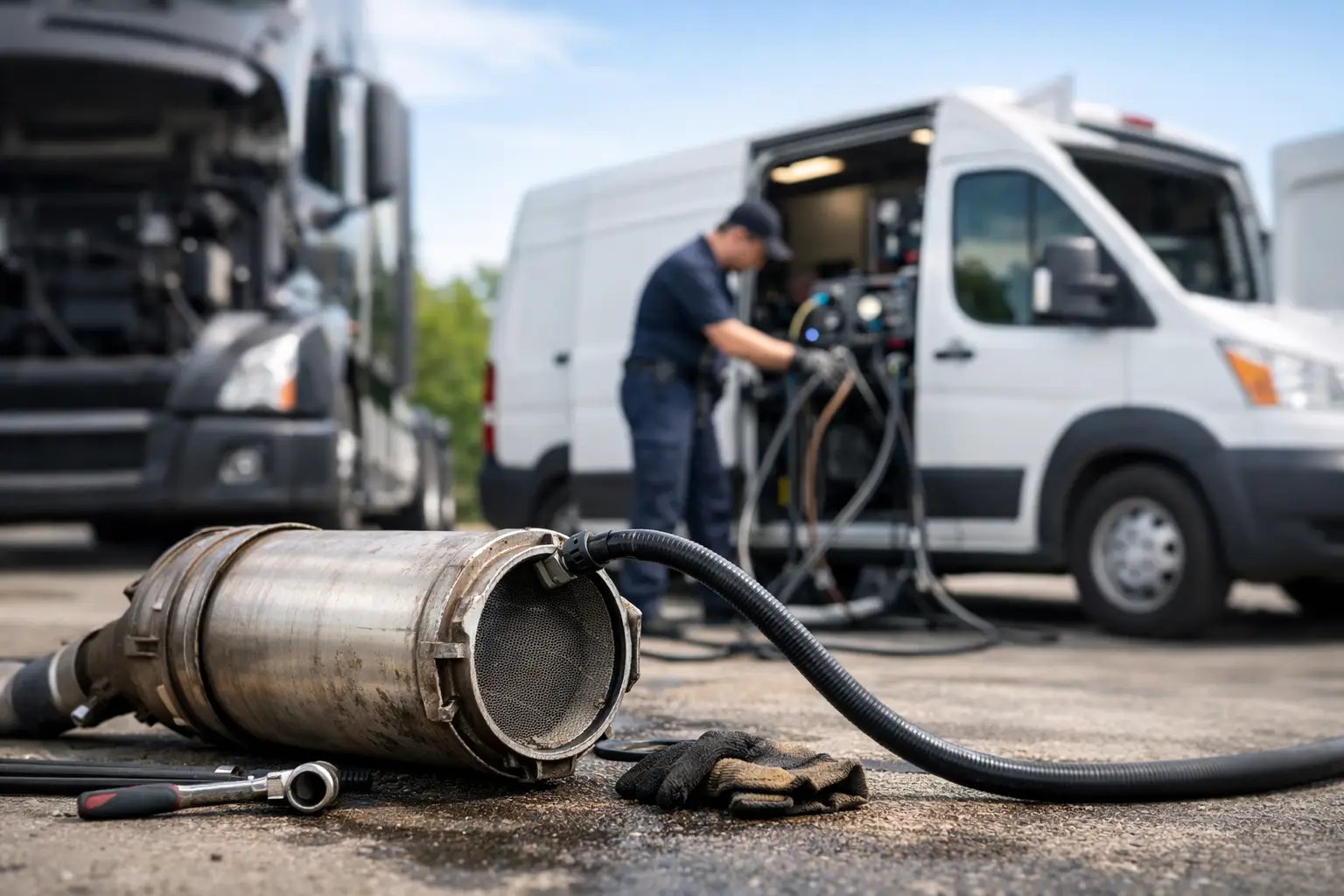
A parked truck with a derate warning is not having a minor issue. When the aftertreatment system starts loading up, the clock is already running against your route, your load, and your next stop. A mobile DPF cleaning service matters because waiting too long can turn a service call into a no-start condition, repeated regens, or a truck that keeps dropping power every time it gets back on the road.
For commercial drivers and fleet operators, the real question is not whether the DPF needs attention. It is whether the problem is limited to soot loading, or whether a deeper fault is blocking regen and forcing the truck into reduced performance. That difference is what separates a straightforward roadside fix from a truck that keeps losing time because the root cause was missed.
What a mobile DPF cleaning service actually handles
A diesel particulate filter is built to trap soot, then burn it off during regeneration. On paper, that sounds simple. In the field, it rarely is. DPF faults are often tied to sensor issues, doser problems, exhaust leaks, failed regens, excessive idle time, or engine conditions that create too much soot in the first place.
That is why a real mobile DPF cleaning service is not just someone showing up to force a regen and leave. The job starts with diagnostics. A technician needs to see why the filter loaded up, whether the truck can complete a parked regen safely, and whether the system is reporting accurate pressure and temperature data.
If the filter is overloaded but the rest of the system is still capable of functioning, an on-site regen or service procedure may get the truck moving again. If the data shows a failed sensor, a restriction beyond normal soot load, or an issue upstream that keeps driving soot production, cleaning alone will not solve it.
Signs your truck needs mobile DPF service now
Some trucks give plenty of warning before they quit cooperating. Others move from warning lamp to derate faster than drivers expect. Either way, certain patterns usually point to aftertreatment trouble.
Repeated regen requests are one of the biggest red flags. If the truck keeps asking for a regen or recently completed one but still shows high soot load, something is not right. That can mean the regen did not complete correctly, the ash load is too high, or another component is feeding bad information to the ECM.
Loss of power under load is another common sign. If the truck pulls weak, climbs poorly, or feels choked up after a DPF warning appears, restriction in the exhaust system may already be affecting performance. Drivers also see high exhaust temps, check engine lights, stop engine warnings, and active fault codes tied to differential pressure sensors, temperature sensors, or SCR and DOC functions.
There is also the situation many fleets know too well - the truck is still moving, but it is one fault cycle away from a hard derate. That is often the best time to call. Waiting until the unit is fully limited gives the technician fewer options and puts more pressure on the repair.
Why roadside diagnostics matter before cleaning
DPF service gets talked about like it is one problem with one solution. It is not. A clogged filter might be the visible issue, but the cause could be elsewhere in the emissions system or in the engine itself.
A technician needs to check live data, fault history, soot load, differential pressure readings, exhaust temperatures, and regen status before deciding what the truck needs. If the ECM is seeing bad numbers from a sensor, the truck may block regen even when the filter itself is still recoverable. If there is an exhaust leak, the system may never build the conditions required for a proper cleanout. If the engine has an injector or air handling issue, the DPF will keep loading again no matter what you do at the roadside.
This is where shop-level diagnostics in the field make a difference. The goal is not simply to clear codes. The goal is to verify whether the truck can complete a service procedure safely and whether the repair will hold after it leaves.
Mobile DPF cleaning service vs. forcing a quick regen
A lot of downtime starts with a shortcut. Someone sees a soot load issue, forces a regen, clears the warning, and sends the truck back out. Sometimes that works. Sometimes it buys a few hours before the same problem comes right back.
A forced regen is a tool, not the diagnosis. It only makes sense when the truck meets the right conditions and the underlying system can support it. If the filter is too restricted, if a key sensor has failed, or if the truck has another active issue affecting combustion or exhaust flow, forcing a regen may fail or add more heat stress without solving the real problem.
A proper mobile DPF cleaning service looks at the whole picture. That may mean performing a regen, replacing a failed sensor, correcting a related fault, or determining that the filter condition is beyond what can be handled on-site. The right call depends on what the data says, not on what is fastest in the first ten minutes.
When on-site DPF service makes the most sense
Mobile service is especially valuable when the truck is stuck at a shipper, receiver, yard, roadside shoulder, or parking area and downtime is stacking up. For fleets, that means less disruption to schedules and less lost driver time. For owner-operators, it means a better shot at getting back under load without losing an entire day to a preventable emissions issue.
This kind of service is also useful when the truck is still mobile but clearly headed toward derate. Catching a DPF issue early can prevent a more severe shutdown and reduce the chance of secondary problems from repeated failed regen attempts.
In heavy corridor traffic around San Antonio and the surrounding routes, time matters. Trucks running I-35, I-10, I-37, and nearby distribution lanes do not have much room for extra delays. Having a diesel technician come to the truck with diagnostic capability is often the fastest path to a real answer.
What drivers can do before the technician arrives
Do not keep cycling the key and hoping the warning clears. That usually wastes time and can complicate the fault history. If the truck is asking for a parked regen and conditions are safe, follow company procedure and OEM guidance, but do not force repeated attempts if the system keeps aborting.
It helps to note what happened before the warning came on. Did the truck lose power under load, idle for long periods, or show recent regen failures? Did any other warning lights appear first? That information can speed up the diagnosis once the technician is on site.
If possible, avoid shutting the truck down in a position that makes access harder or creates a safety issue for service. The more clearly the symptoms are reported, the faster the repair process usually goes.
What separates a dependable diesel roadside response
DPF problems are rarely convenient, and they do not happen in controlled conditions. They happen during loaded runs, after long idle periods, in traffic, at customer yards, and in the middle of the night. That is why experience with commercial diesel systems matters.
A dependable response means understanding aftertreatment systems, reading the data correctly, and knowing when the issue is a recoverable soot load versus a larger emissions or engine problem. It also means showing up prepared to handle more than one fault path. The truck may need a regen, but it may also need sensor replacement, electrical checks, or a broader emissions diagnosis before it is ready to work again.
TX Road Service is built around that reality - 24/7 roadside support for diesel trucks that need answers quickly and repairs that make sense in the field.
If your truck is showing DPF warnings, repeated regen problems, or signs of derate, the smartest move is to treat it early. A fast, accurate diagnosis on location can save a load, protect your schedule, and keep a manageable emissions problem from becoming a bigger roadside stop.