What Causes Blowby in Heavy-Duty Diesel Engines?
Learn what causes blowby in diesel engines, the warning signs that matter, and how roadside diagnostics can prevent engine damage and extended downtime.
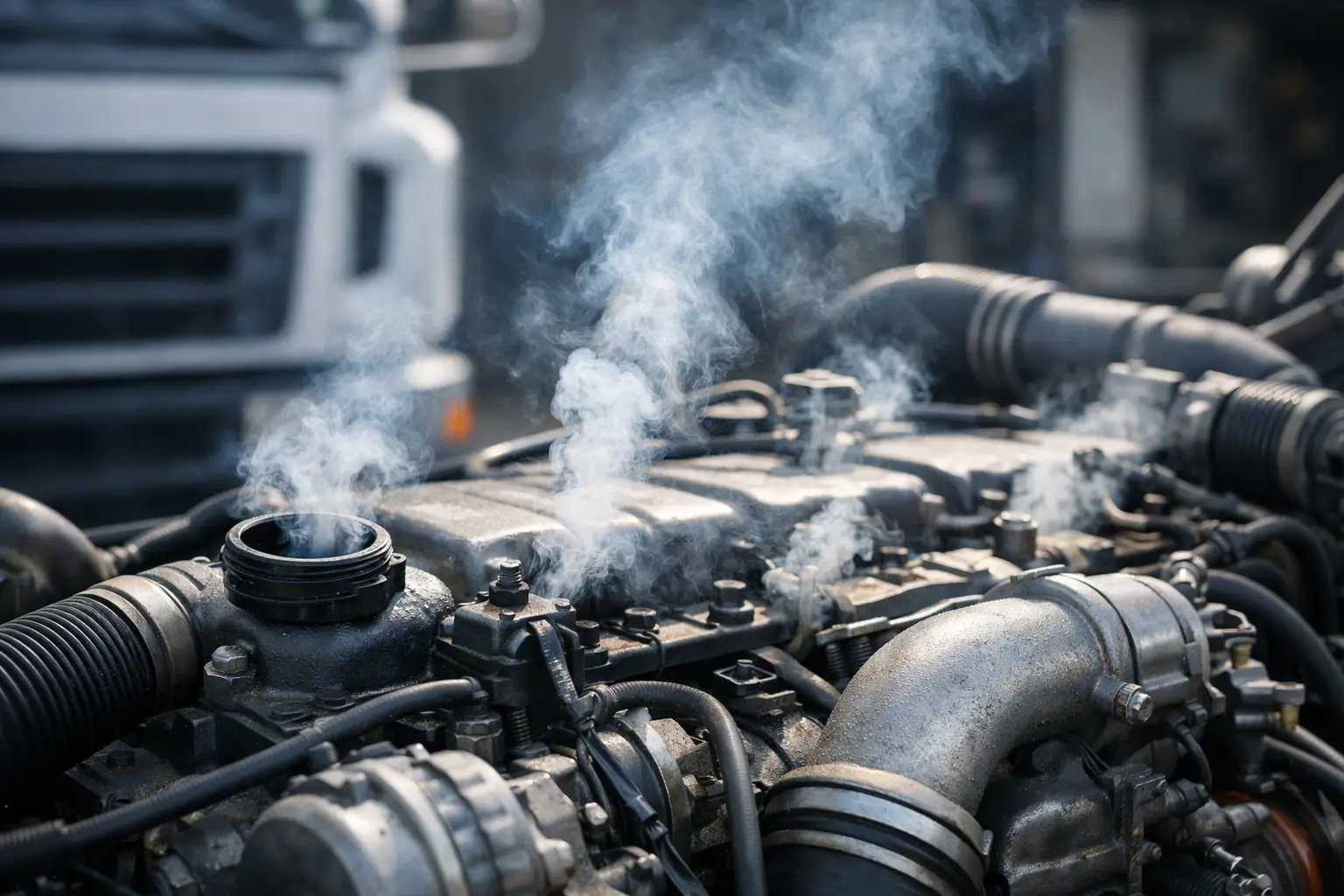
A diesel engine can have plenty of power, start cleanly, and still be developing a blowby problem. The early clues are often easy to dismiss: oily residue around the breather, vapor pushing from the crankcase vent, unexplained oil use, or pressure building where it should not. For a working truck, that is not a condition to watch indefinitely. It is a signal to find out what causes blowby before a manageable repair turns into major engine downtime.
What Causes Blowby in a Diesel Engine?
Blowby occurs when combustion pressure escapes past the piston rings and enters the crankcase. During normal combustion, cylinder pressure should stay above the piston long enough to drive it down and produce torque. The piston rings create the seal that keeps most of that pressure in the cylinder while also controlling oil on the cylinder wall.
No diesel engine has a perfectly zero-leak seal. A small amount of combustion gas entering the crankcase is normal, particularly on a high-mileage heavy-duty engine. The problem starts when the volume becomes excessive. Increased crankcase pressure can force oil vapor through the breather system, push oil past seals, contaminate intake components, and contribute to leaks that appear to come from several different places at once.
The root cause is usually a loss of effective sealing between the piston rings, cylinder wall, and piston. That loss can come from wear, heat damage, poor lubrication, contamination, or a separate engine condition that is creating abnormal cylinder pressure.
Worn Rings and Cylinder Liners
Worn piston rings and cylinder liners are among the most common reasons for excessive blowby. Over thousands of operating hours, the rings and liner walls wear together. The ring can no longer maintain the pressure seal needed during compression and power strokes, allowing more combustion gas into the crankcase.
This is especially common on engines that spend long periods under heavy load, run high mileage, idle excessively, or have had inconsistent maintenance. Normal wear is not always an immediate roadside failure, but it should not be ignored when it begins affecting oil consumption, power, or crankcase pressure.
A worn liner may be polished or glazed rather than properly crosshatched. When that happens, the rings may struggle to seat and control oil. The result can be a combination of blowby, blue smoke, rising oil consumption, and lower compression. The exact symptoms depend on how many cylinders are affected and how severe the wear has become.
Ring Damage, Sticking, and Broken Lands
Rings do not have to be worn out to leak. They can stick in their grooves because of carbon buildup, oil breakdown, extended idle time, or contamination. A stuck ring cannot expand and follow the cylinder wall correctly, so combustion gases move past it.
Broken piston rings, damaged ring lands, and cracked pistons create a more serious version of the same problem. These failures can follow an overheating event, detonation-like combustion conditions, injector problems, excessive cylinder pressure, or foreign material entering a cylinder. A truck may show a sudden change in crankcase vapor, rough running, a misfire, unusual exhaust smoke, or rapid oil loss.
This is where diagnosis matters. A technician should not assume every blowby complaint means an engine needs an overhaul. Identifying whether the issue is generalized wear, a single weak cylinder, an injector-related combustion problem, or a restricted ventilation system determines the right repair path.
Overheating and Poor Lubrication
Heat is hard on pistons, rings, liners, and engine oil. An overheating event can distort components enough to reduce ring sealing, damage the oil film on the cylinder walls, or cause scuffing between the piston and liner. Even after coolant temperature returns to normal, the internal damage may continue to show up as blowby and oil consumption.
Low oil pressure, incorrect oil viscosity, extended oil-change intervals, or oil contaminated with fuel or coolant can also accelerate ring and liner damage. Diesel oil does more than lubricate. It helps manage heat, suspend soot, protect surfaces, and support ring movement. When oil breaks down, ring grooves can carbon up and cylinder walls lose protection.
Fuel dilution deserves particular attention. Fuel in the oil lowers viscosity and weakens the protective oil film. Depending on the engine, failed injector components, excessive regens, or other fuel-system issues may contribute. Coolant contamination is equally serious because it can attack bearings and leave damaging deposits throughout the lubrication system.
Air Intake Problems and Dust Damage
A leaking intake boot, damaged air filter housing, loose clamp, or improperly sealed filter can let abrasive dirt enter the engine. On a diesel, fine dust can wear cylinder walls and rings surprisingly fast. The damage may not announce itself immediately, but over time it reduces compression sealing and increases blowby.
The air filtration system should be inspected as part of any blowby diagnosis. Replacing a breather component without finding an intake leak only treats the visible symptom. A proper inspection looks for damaged piping, unseated boots, evidence of dust past the filter, and restrictions that affect airflow and turbocharger operation.
Crankcase Ventilation Restrictions Can Look Like Blowby
Not every oily engine compartment has severe ring wear. A restricted crankcase ventilation filter or breather can trap pressure that should be vented from the crankcase. That pressure may force oil past gaskets and seals, create oil mist near the breather, and make a normal level of combustion leakage look far worse.
Many modern heavy-duty engines use closed crankcase ventilation systems with serviceable filter elements. If the filter is plugged, damaged, or overdue for replacement, pressure control suffers. The engine may develop leaks around the valve cover, front cover, oil pan, or turbo-related plumbing.
This is one of the most important trade-offs in diagnosis: a failed ventilation component can be a comparatively direct repair, while true excessive blowby from worn cylinders requires a deeper engine evaluation. Both can produce crankcase pressure. The difference is found through inspection and testing, not guesswork.
Warning Signs That Need Fast Attention
Visible vapor from the breather is not enough by itself to condemn an engine. Ambient temperature, engine temperature, and normal crankcase vapor can affect what a driver sees. The concern rises when several symptoms appear together.
Watch for these conditions, especially if they are getting worse:
- Heavy vapor or pulsing pressure from the crankcase breather
- Oil pushed from seals, gaskets, dipstick tube, or breather connections
- Increased oil consumption without an obvious external leak
- Blue exhaust smoke, loss of power, hard starting, or rough operation
- Repeated oil contamination, high crankcase pressure faults, or abnormal engine noise
A sudden change is generally more urgent than a slow, stable condition. If blowby appears after overheating, a missed oil-pressure event, an injector concern, or intake damage, continuing to run the truck can increase internal damage. If oil is being forced onto hot engine surfaces or exhaust-side components, stop and assess the situation instead of trying to finish the route.
How Diesel Technicians Confirm the Cause
Shop-level diagnostics begin with the basics: engine oil level and condition, active and stored fault codes, breather and ventilation inspection, external leak locations, intake tract condition, and cooling-system history. The goal is to separate a ventilation restriction or external issue from internal cylinder leakage.
A technician may measure crankcase pressure at idle and under load, where safe and appropriate. Compression testing, cylinder contribution data, injector evaluation, borescope inspection, and oil analysis can help narrow the problem further. The available tests depend on the engine platform and whether the truck is safe to operate.
The repair decision should be based on the failure found. Replacing a crankcase filter may resolve a restricted ventilation issue. Correcting an air leak or injector fault may prevent further damage. If tests point to worn liners, damaged rings, or a failed piston, the truck needs a repair plan that accounts for the severity of internal engine wear.
Protecting Uptime on the Road
Blowby is often the result of a condition that has been building for months, but the roadside symptom can show up at the worst possible time. Regular oil service, air-filter and intake inspections, cooling-system maintenance, and quick attention to oil consumption give operators the best chance of catching problems early.
For trucks operating around San Antonio and the major I-35, I-10, I-37, and I-410 corridors, TX Road Service provides 24/7 emergency roadside support and diesel diagnostics when crankcase pressure, oil leaks, smoke, or drivability issues threaten the run. The right next step is not to assume the engine is finished. It is to diagnose the pressure source quickly, protect the engine from further damage, and make a repair decision based on real evidence.