Top Warning Signs Before an Engine Derate
Spot the top warning signs before engine derate in your diesel truck. Act early to protect power, schedules, and roadside uptime for fleets.
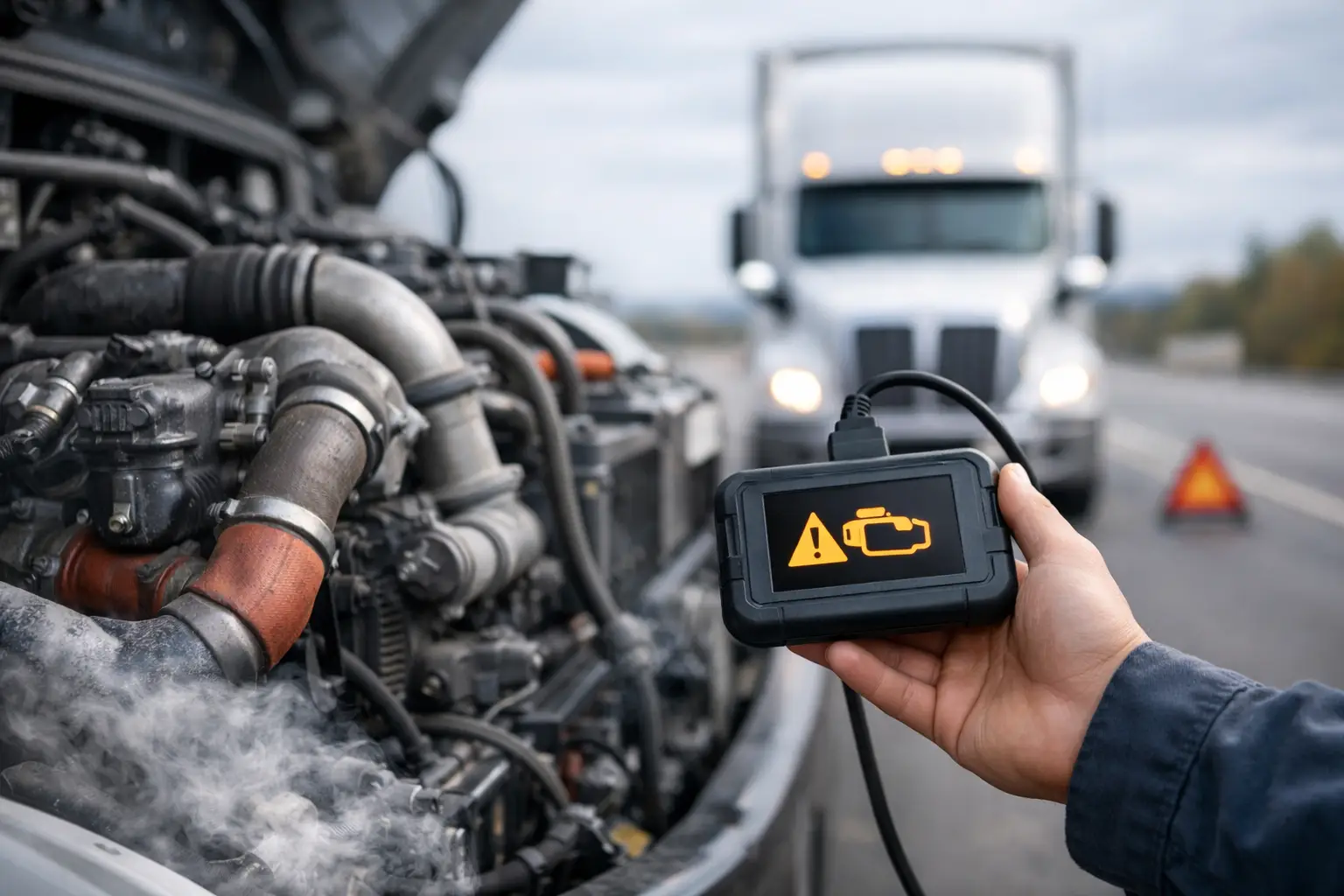
A derate rarely comes out of nowhere. The top warning signs before engine derate usually show up as an active fault, a failed regeneration, reduced response under load, or a dash warning that gets ignored until the truck limits power. For an owner-operator or fleet running the San Antonio corridors, that delay can turn a manageable emissions or sensor issue into a roadside interruption.
An engine derate is the ECM protecting the engine and emissions system when it sees a condition that could cause damage, excessive emissions, or a compliance failure. The truck may reduce torque, limit speed, restrict RPM, or eventually enter a more severe power-reduction mode. The right move is not to guess at the code or keep pushing toward the next stop. Get the fault identified while the truck still has usable power.
What Causes an Engine Derate?
On modern diesel trucks, derates are commonly tied to the aftertreatment system. The diesel particulate filter, DEF system, NOx sensors, exhaust gas temperature sensors, pressure sensors, wiring, and turbo or EGR-related systems all provide data the ECM uses to control operation. When that data is out of range, or when the system cannot complete a required process, the ECM responds.
Some problems are straightforward, such as low DEF quality, a damaged sensor connector, or excessive soot loading that needs a proper regeneration. Others need shop-level diagnostics because the visible code is only part of the failure. A fault for high DPF differential pressure, for example, may be caused by a restricted filter, a failed pressure sensor, damaged hoses, an exhaust leak, or an engine issue creating too much soot.
That is why clearing codes without testing the system is a short-term gamble. If the underlying condition remains, the warning returns and the derate countdown keeps moving.
Top Warning Signs Before Engine Derate
Repeated DPF or regen warnings
A DPF warning that returns after a regeneration is not normal. It can mean the filter is loading faster than the truck can clean it, the regen is not reaching the temperatures it needs, or a sensor is reporting bad information to the ECM.
Pay attention when the truck asks for parked regenerations more often than usual, cancels a regen, or shows incomplete regeneration messages. A single parked regen may resolve a routine loading event. Repeated requests, a regen that will not initiate, or a warning that remains active afterward requires diagnosis before the truck progresses into a power limit.
DEF system warnings or a countdown message
DEF-related faults can escalate quickly. Low DEF level is one issue. Bad fluid quality readings, heater faults, dosing failures, frozen lines, pump problems, and NOx sensor faults are different problems that can trigger an inducement sequence.
A dashboard message showing remaining miles, starts, or time before a speed restriction is a direct warning that the ECM has begun its enforcement process. Do not treat it as extra operating range. Treat it as time to diagnose the system while the truck can still be positioned safely and dispatched efficiently.
Loss of pull under load
A truck that feels flat on grades, takes longer to build speed, or will not pull weight like it normally does may already be experiencing a partial derate. Drivers sometimes describe it as a lazy turbo, but the cause can be broader than the turbocharger itself.
Boost leaks, charge-air issues, exhaust restrictions, EGR faults, fuel delivery concerns, and active emissions faults can all reduce available torque. If the truck is losing power while active fault lamps are present, continuing to work it hard can add heat, soot loading, and additional trouble codes.
Check engine light paired with warning lamps
A single check engine light needs attention. A check engine light combined with a DPF light, DEF warning, stop-engine message, or flashing indicator needs faster action. The combination matters because it tells you the truck is seeing a fault and an associated system condition that may affect operation.
The dash does not provide a complete diagnosis. Fault codes must be read alongside live data, commanded values, sensor readings, soot load, exhaust temperatures, and the truck's recent operating history. That is the difference between replacing a part based on a code and fixing the reason the code set.
High exhaust temperatures or unusual fan operation
High exhaust temperatures during an active regen can be expected. High temperatures outside normal operating conditions, frequent fan engagement, or excessive heat around the aftertreatment system should not be dismissed.
A cooling-system concern, failed temperature sensor, exhaust restriction, or regen issue can affect how the truck manages heat. If there is a burning smell, visible smoke, a stop-engine warning, or a rapid temperature increase, shut down according to the truck manufacturer's guidance and get professional help. A forced regeneration is not appropriate for every fault condition.
New exhaust leaks, sensor damage, or wiring problems
Road vibration, heat, moisture, and debris are hard on emissions-system wiring and exhaust components. A loose connector at a NOx sensor, chafed harness, cracked DEF line, damaged exhaust temperature sensor, or leak upstream of aftertreatment components can create readings the ECM cannot trust.
These issues may appear intermittent at first. The warning can clear, then return after a bump, a heat cycle, or rain. Intermittent faults are still faults. Capturing them early with diagnostic equipment is far easier than waiting for a hard derate at a receiver, scale, or shoulder.
When a Parked Regen Helps - and When It Does Not
A parked regen can be useful when the system has requested it and there are no fault conditions preventing completion. It is designed to burn accumulated soot from the DPF under controlled conditions. It is not a cure for every DPF lamp.
Do not force a regen simply because the truck has reduced power. Active DEF faults, sensor faults, serious exhaust leaks, high temperature concerns, or excessive ash loading can make a regeneration ineffective or unsafe. Ash does not burn out during regen, and a filter with excessive ash or physical damage needs a different repair decision.
The technician should verify why the truck requested the regen, whether it completed successfully, and what soot and differential-pressure readings look like afterward. That protects the truck from repeated failed regens and helps avoid unnecessary downtime.
What Drivers Should Do When the Warning Appears
First, document the warning message and fault codes if your display provides them. Note whether the truck is in a parked regen, hauling heavy, losing power, or showing a countdown. Those details help shorten diagnostic time.
Next, avoid clearing codes or disconnecting batteries to make the dash light disappear. That can erase valuable information and does not repair the cause. Keep operating demands reasonable, and do not continue pulling hard if power is reduced or a stop-engine warning appears.
Finally, act before the derate becomes severe. Mobile diagnostics can confirm whether the truck needs a regeneration service, DEF-system testing, wiring repair, sensor replacement, exhaust repair, or deeper engine-performance troubleshooting. The goal is to correct the failure before the ECM leaves you with limited speed and limited options.
Roadside Diagnostics That Protect Uptime
A proper roadside diagnostic process starts with more than a code scan. The technician needs to check active and inactive faults, freeze-frame information, emissions-system readiness, sensor plausibility, soot load, differential pressure, DEF operation, and the conditions that caused the fault to set.
For trucks operating on I-35, I-10, I-37, or the surrounding San Antonio area, TX Road Service provides 24/7 mobile diesel diagnostic and repair support when warning lights, failed regens, and derate conditions threaten the run. The priority is to identify what the truck needs on-site and make the repair decision based on actual data, not assumptions.
A derate warning is your window to act. Use it. Address the first active fault, verify the repair, and keep a minor warning from becoming the reason the truck stops moving.