Roadside Repair Versus Shop Repair for Trucks
Roadside repair versus shop repair: learn which diesel truck problems can be fixed on-site and when controlled shop diagnostics are the right shop call.
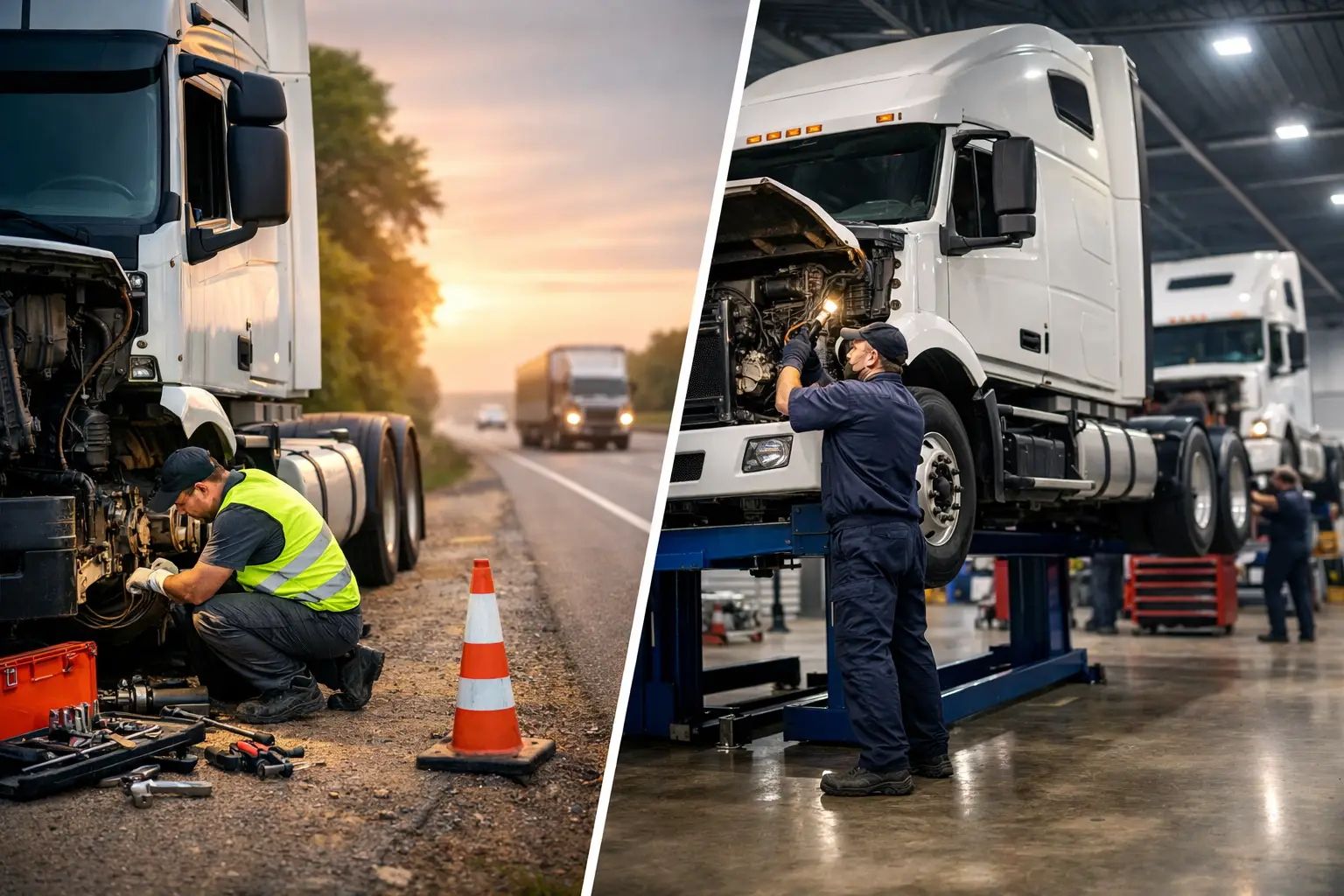
A parked truck on the I-35 corridor is not a minor inconvenience. It is a missed appointment, a disrupted load, a driver under pressure, and a fleet asset losing productive hours. The decision between roadside repair versus shop repair should come down to one question: can the problem be diagnosed and corrected safely where the truck sits, or does it require the controlled environment and extended access of a shop?
For commercial diesel equipment, the answer is rarely as simple as “minor repair” or “major repair.” A failed sensor can create a no-start condition. A clogged emissions component can cut power and trigger a derate. An air-system issue can put a driver out of service even when the engine itself is running strong. The right repair path is the one that gets the truck safely back to work without guessing, unnecessary delays, or a temporary fix that creates another failure down the road.
When Roadside Repair Is the Right Call
Roadside service is built for failures that stop a truck, threaten a schedule, or create an immediate compliance concern but can still be accessed and repaired in the field. A qualified mobile diesel technician brings diagnostic equipment, tools, and the working knowledge to identify the actual fault before replacing parts.
The strongest roadside repair candidates are issues with a clear, repairable cause. Electrical faults, no-start conditions, battery and charging-system problems, air leaks, coolant leaks, damaged hoses, sensor failures, and many fuel-delivery concerns can often be handled on-site. The same is true for many DPF and regen-related events when the technician can verify fault codes, operating conditions, and the root cause of the failed regeneration.
A roadside repair is not just about changing a part. It starts with proper diagnostics. If a truck is in derate, the technician needs to determine whether the problem is soot load, a failed temperature or pressure sensor, wiring damage, an exhaust leak, an active engine fault, or another condition preventing a successful regen. Clearing a code without correcting the cause can leave the driver stranded again a few miles later.
Mobile repair also makes sense when the truck is mechanically sound enough to remain where it is while the work is performed safely. On a secure lot, at a distribution center, or at a roadside location with adequate access, field service can eliminate the lost time associated with waiting for a repair facility to open or moving the vehicle to another location. For fleets operating around San Antonio, that difference can protect a delivery window and keep a driver from losing an entire shift.
Roadside Repairs That Protect Uptime
A capable mobile diesel service can address more than basic breakdowns. Shop-level scan tools and hands-on troubleshooting allow technicians to work through engine fault codes, aftertreatment warnings, drivability complaints, electrical problems, and HVAC failures that make a long Texas run miserable or unsafe.
DOT scale service is another example of work that belongs in the field. When a commercial vehicle has a compliance-related interruption, the priority is to identify the defect, correct what can be corrected at the location, and get the truck moving within safe operating limits. Speed matters, but accurate repair matters more.
The advantage of roadside work is direct: the technician comes to the disabled equipment, assesses the condition where it failed, and focuses on restoring operation. That is especially valuable after hours, on weekends, and during the middle of a run when a traditional repair schedule does not match the demands of freight.
When Shop Repair Is the Better Decision
Some repairs require more room, more time, more extensive disassembly, or test conditions that cannot be duplicated safely on the roadside. Sending a truck to a shop is the right call when the problem is complex, repeatable only under certain operating conditions, or likely to involve several connected systems.
For example, a recurring engine performance complaint may require extended data logging, detailed wiring checks, multiple test cycles, or deeper inspection after initial diagnostics. An emissions issue may appear to be a simple regen failure but reveal a broader aftertreatment problem that needs components removed, tested, or cleaned under controlled conditions. Those are not jobs to rush beside a busy highway.
Shop repair also becomes necessary when the vehicle cannot be safely worked on where it is located. Limited access beneath the truck, poor lighting, unsafe traffic exposure, restricted parking conditions, or a repair that requires the vehicle to be immobilized for an extended period can all change the decision. A good technician does not force a roadside repair simply because the truck is away from a facility.
The Controlled Environment Matters
A shop gives technicians stable lighting, dedicated equipment, broader parts access, and the time to verify a repair through a complete inspection. That matters when a fault is intermittent or when several warning indicators point to a problem that cannot be isolated with a quick visual check and scan.
It also matters after an emergency repair. A field fix may restore operation and get the truck off the shoulder, but a follow-up inspection can be the smart move when the failed part points to a larger system issue. A damaged connector, for instance, may be the visible problem while the underlying cause is harness rubbing, water intrusion, vibration, or a charging-system fault.
The goal is not to choose a shop because it sounds more thorough. The goal is to use the environment that allows the repair to be done correctly the first time.
How to Make the Repair Decision Faster
Drivers and dispatchers can shorten the diagnostic process before a technician arrives. Clear information helps the technician arrive prepared and reduces the time spent chasing basic facts at the scene.
Share the truck’s year, make, model, engine, current location, fault codes if available, warning lights, and a plain description of what happened. Explain whether the truck cranks, starts, builds air pressure, has reduced power, recently completed a regen, overheated, or developed the issue while loaded. If the problem is intermittent, describe what conditions bring it on: speed, engine temperature, weather, load, or time since the last stop.
Just as important, be honest about the truck’s position and access. A technician needs to know whether the vehicle is on a shoulder, at a shipper, in a yard, at a scale, or parked in a safe lot. That information determines what tools are practical, what repair options are safe, and whether roadside support can resolve the issue efficiently.
Roadside Repair Versus Shop Repair Is Not an Either-Or Strategy
The best maintenance operations use both. Roadside repair handles the urgent failure that threatens today’s load. Shop repair handles the deeper diagnosis, inspection, and planned work that keeps the same fault from returning next week. Treating mobile service as a last resort misses the point. For commercial trucks, it is often the fastest path to a correct diagnosis when the vehicle cannot afford to wait.
TX Road Service provides 24/7 emergency roadside support for commercial diesel trucks across San Antonio and surrounding freight corridors. The focus is simple: assess the failure, perform the repair that can be completed safely on-site, and give a straight answer when the truck needs a more controlled repair setting.
When a truck goes down, do not decide based on where the vehicle happens to be parked. Decide based on the fault, the safety of the work area, and what it takes to put dependable miles back under the tires.