Mobile Semi Truck Diagnostics Explained
Mobile semi truck diagnostics identify faults on-site fast, helping drivers and fleets cut downtime, avoid delays, and get the right repair started.
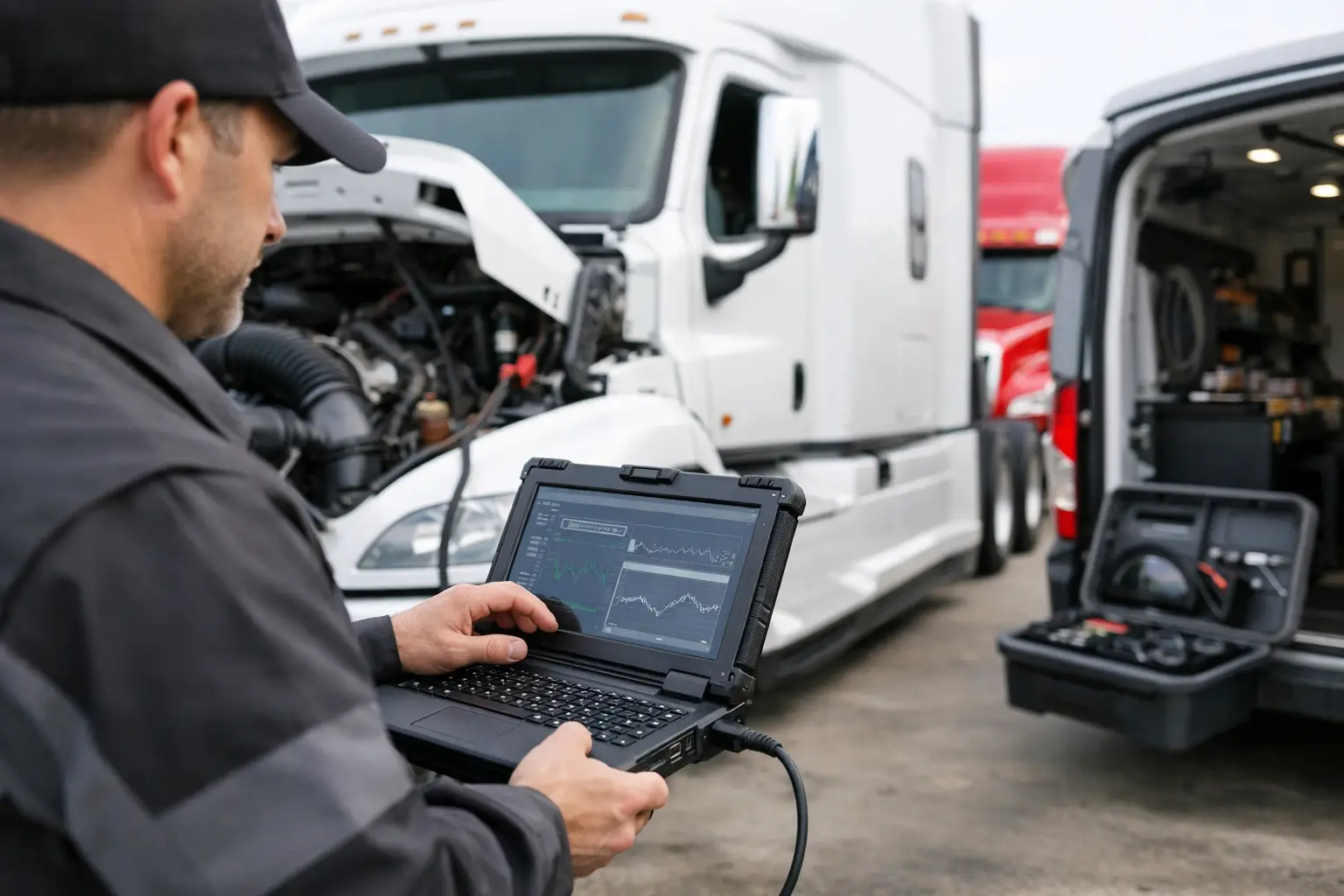
A check engine light on a loaded semi at 2:00 a.m. does not leave much room for guesswork. If the truck is parked on the shoulder, stuck at a shipper, or derated on a route that still has hours to go, the question is simple - what failed, and how fast can it be confirmed? That is where mobile semi truck diagnostics matter. They bring shop-level fault finding to the truck, so the repair starts with facts instead of assumptions.
For commercial drivers and fleet managers, diagnostics are not just about reading a code and clearing a light. A heavy-duty diesel truck can throw a fault for emissions, fuel delivery, turbo performance, aftertreatment temperatures, electrical communication, or sensor failure, and those issues do not all carry the same risk. Some faults let the truck limp to the next stop. Others turn into a no-start, a forced derate, or a roadside compliance problem if they are ignored.
What mobile semi truck diagnostics actually cover
Good mobile diagnostics go well beyond plugging into the truck and pulling fault codes. Codes are a starting point, not a finished answer. The real job is interpreting those codes with live data, system tests, and the truck's operating symptoms.
On a semi truck, that can mean checking engine fault history, monitoring sensor values, reviewing aftertreatment data, confirming voltage and communication on electrical circuits, and testing components that may be causing a chain reaction. A clogged DPF, for example, may show up with multiple related faults. A weak sensor, failed doser component, wiring issue, or interrupted regen process can all lead the truck to the same bad outcome, but the repair path is different in each case.
That is why roadside diagnostics need diesel-specific knowledge. Heavy-duty systems are layered, and one fault can mislead a technician who is only looking for the first code that appears on the screen.
Why mobile semi truck diagnostics save real downtime
When a truck is down, every hour affects the load, the schedule, and the driver. Waiting until normal business hours or moving the truck around without a clear diagnosis can waste time that the operation does not have.
Mobile semi truck diagnostics cut that delay by putting the evaluation where the failure happened. The technician can assess the truck in its current condition, under the exact symptoms that caused the breakdown or warning light. That matters because intermittent faults, regen failures, and power loss complaints do not always show the same way once the truck has been shut down, restarted, or moved.
There is also a practical advantage for fleets. If a technician can verify the cause on-site, the next step becomes clearer. Maybe the issue is a failed sensor and the truck can be repaired on location. Maybe it is an aftertreatment problem that needs immediate regen support and system checks. Maybe it is an electrical fault that is causing communication loss between modules. The value is not just speed - it is making the right decision early.
The problems diagnostics catch before they get worse
A lot of roadside calls start with broad symptoms. Loss of power. Active warning lights. High exhaust temps. Poor throttle response. Excessive soot load. A crank-no-start. The truck may still run, but not correctly.
Those symptoms often point to a handful of systems that need close attention. Engine management is one. If fuel pressure, air metering, turbo operation, or sensor inputs are off, the truck may protect itself by limiting performance. Aftertreatment is another major category. DPF and regen issues can trigger derates fast, especially if the truck has been trying and failing to complete a proper regen cycle.
Electrical problems are just as common as mechanical ones. A damaged harness, weak power supply, bad ground, or communication issue between modules can create faults that look more serious than they first appear. On the other hand, a simple-looking code can sometimes trace back to a larger failure in the emissions or fuel system. That is why diagnostics have to be methodical.
A rushed code read can miss the real cause. A proper diagnostic process narrows the fault down before parts are replaced or systems are reset.
On-site diagnostics are different from basic code scanning
Drivers have seen this problem before. Someone scans the truck, reads a code description, clears it, and calls that a diagnosis. The truck goes a few miles, the same warning comes back, and now even more time has been lost.
Basic scanning has limits. It tells you that the truck recognized a problem. It does not always tell you why the problem happened, whether it is current or intermittent, or what supporting conditions are present. On heavy-duty diesels, those details matter.
A strong mobile diagnostic service looks at fault status, live data, command functions, and operating conditions. It compares what the truck is reporting against what the system should be doing. If the aftertreatment temperature is not rising during regen, the question becomes whether the issue is fuel dosing, sensor feedback, restriction, or command failure. If the engine is in derate, the technician needs to know whether the root cause is emissions-related, electrical, or tied to another monitored system.
That distinction is what separates an informed repair from repeated downtime.
When roadside diagnostics make the most sense
Some situations call for immediate mobile diagnostic support because the risk of delay is high. A check engine light by itself is not always an emergency, but an active derate, no-start condition, regen failure, or severe drivability issue usually is. The same goes for faults that could affect DOT compliance or prevent the truck from completing its route safely.
Mobile diagnostics also make sense when the truck is stuck at a customer site, in a yard, or along a major corridor where every extra hour creates more operational pressure. For operators running through San Antonio and the I-35, I-10, or I-37 corridors, that kind of delay can throw off an entire day of scheduling.
It also depends on the truck's condition. If the fault is active and the truck is still presenting the problem, on-site testing often produces a cleaner answer than waiting. Some issues are easiest to verify while the system is still hot, loaded, or faulted in real time.
What drivers and fleet managers should expect from the process
The best roadside diagnostic calls are efficient because the information starts clean. The technician needs the unit number, engine make if known, location, symptoms, warning lights, whether the truck is in derate, and what happened before the problem started. If a regen was attempted, that matters. If recent repairs were done, that matters too.
Once on-site, the process usually starts with system access and fault review, then moves into targeted testing based on what the truck is doing. Sometimes the answer is straightforward. Other times the first code leads to a deeper issue involving sensors, wiring, air handling, or aftertreatment performance.
There is no honest way to say every truck can be diagnosed in the same amount of time, because failures vary. Intermittent faults can take longer than hard faults. Electrical issues can be more time-consuming than obvious component failures. But the goal stays the same - identify the real cause fast enough to move the repair forward without unnecessary delay.
Why diesel experience matters on a roadside call
A semi truck is not forgiving when diagnostics are handled casually. The systems are complex, the consequences of misdiagnosis are expensive, and the truck may be sitting in conditions that make every minute count.
That is why roadside diagnostics should be handled by technicians who work specifically on commercial diesel equipment. They need to understand engine controls, emissions systems, regen logic, electrical faults, and the way heavy-duty trucks react under load and under fault conditions. They also need to work with urgency, because a truck that cannot complete its route is not a minor inconvenience.
For a company like TX Road Service, the point of mobile diagnostics is simple - bring capable diesel troubleshooting to the truck, wherever the interruption happens, so the driver and fleet get a real answer instead of more uncertainty.
If your truck is showing active faults, losing power, failing regen, or heading into derate, waiting rarely improves the situation. The smarter move is to get the problem identified where it sits, while the symptoms are still there and the next repair decision can be made with confidence.