Mobile Repair for Fleet Trucks That Cuts Downtime
Mobile repair for fleet trucks keeps diesel units moving with on-site diagnostics, roadside fixes, and faster response when breakdowns hit hard.
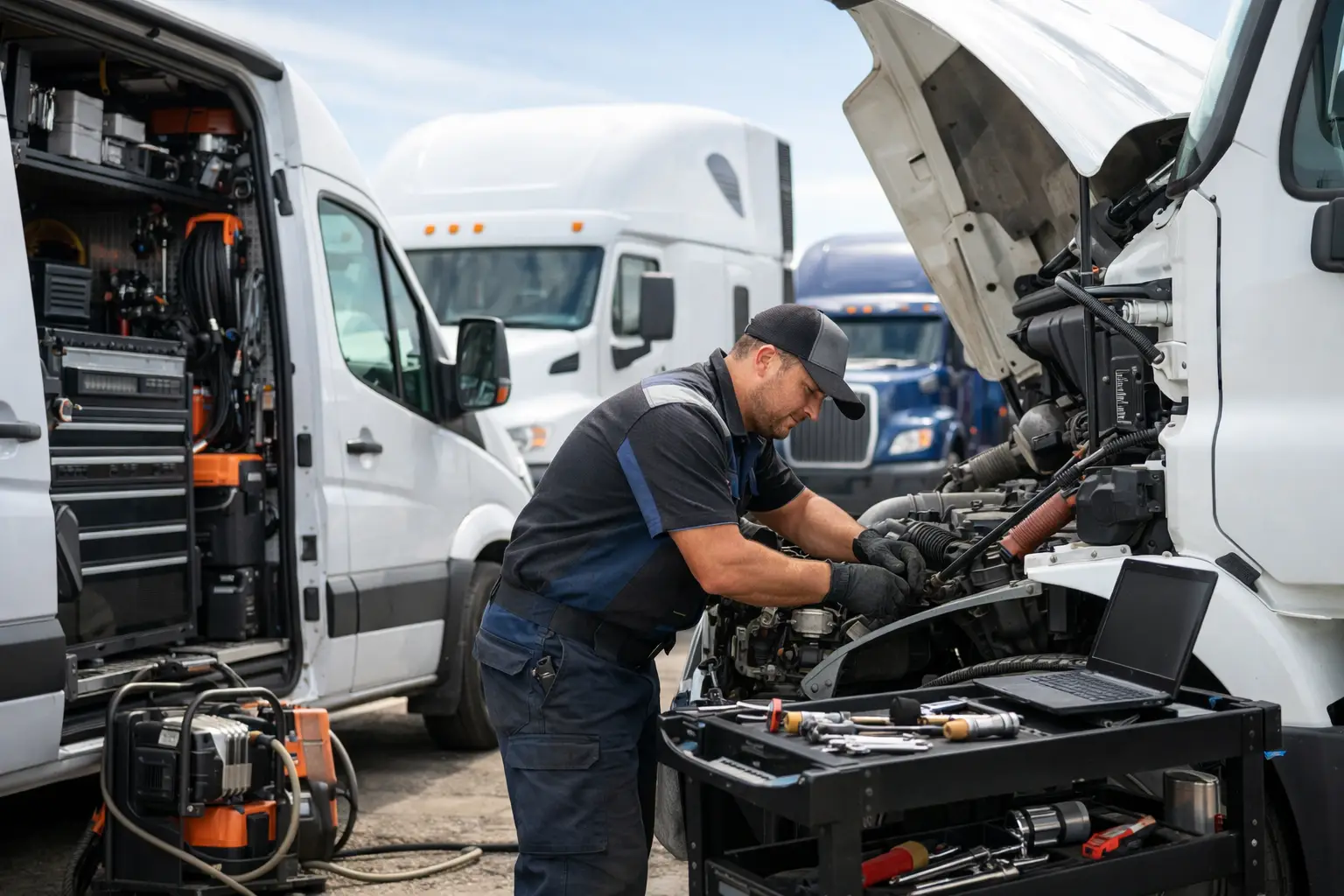
A fleet truck sitting on the shoulder, stuck at a customer site, or down in a yard is not just a repair problem. It is a schedule problem, a driver problem, and often a revenue problem by the hour. That is why mobile repair for fleet trucks matters. When the technician comes to the truck with the right diagnostic capability and diesel experience, the job can move from stalled to operational without wasting critical time waiting on a shop opening or rearranging the entire day.
For fleet managers and owner-operators, the real issue is not whether repairs happen. It is how fast the problem is identified, how much of the repair can be completed on-site, and whether the person doing the work understands heavy-duty diesel systems well enough to avoid guesswork. In commercial trucking, bad diagnosis costs more than broken parts.
Why mobile repair for fleet trucks works
Traditional shop repair still has its place, especially for long-duration mechanical work. But many common failures that stop fleet trucks do not require a full shop visit if the technician arrives equipped and knows diesel systems inside and out. A no-start condition, forced derate, failed regen, electrical issue, air system problem, or A/C failure can often be addressed where the truck sits.
That changes the math for a fleet. Instead of losing hours to transport delays, driver downtime, and missed appointments, the repair process starts immediately at the breakdown location. For regional operations running around San Antonio, along I-35, I-10, or I-37, that speed matters. Dispatch does not need theory. It needs an answer, a diagnosis, and a path to getting the unit back in service.
Mobile service also helps when the truck is technically running but not safely or efficiently. A check engine light with reduced power, repeated regen failures, or DOT-related issues can turn a manageable problem into a hard stop if ignored. Catching those issues on-site gives fleets a better chance to keep the day from falling apart.
The repair call is only as good as the diagnosis
A lot of roadside calls sound simple at first. The truck will not build air. The engine is in derate. The A/C stopped working. The batteries keep going dead. But symptoms are not the same as causes, and fleet equipment is too complex for parts swapping.
That is where shop-level diagnostics in the field make the difference. A mobile diesel technician should be able to pull fault codes, verify data, test circuits, evaluate emissions performance, and determine whether the failure is mechanical, electrical, or sensor-related. That matters because the fastest repair is the correct repair the first time.
For fleet operations, accurate diagnosis also helps with planning. If the issue can be corrected roadside, dispatch gets a realistic return-to-service window. If the problem is larger, the fleet can make informed decisions early instead of burning half a day on uncertainty.
What breaks down most often in fleet service
Fleet trucks do not all fail the same way. Duty cycle, mileage, idle time, load weight, and maintenance history all play a role. Still, certain categories come up again and again in mobile diesel work.
Electrical faults are common because one wiring issue, poor ground, failed sensor, or charging problem can shut down a truck that otherwise looks mechanically sound. Air system issues are another major source of downtime. If the truck cannot maintain proper air pressure, it is not staying on schedule.
Emissions-related problems are now routine in fleet service. DPF restrictions, failed regens, pressure sensor faults, and related aftertreatment issues can force derates and remove a truck from service fast. These are not problems for general automotive repair. They require diesel-specific knowledge and the right equipment.
Climate control failures also matter more than some people admit. In Texas heat, A/C repair is not a comfort issue for many commercial operators. It affects driver endurance, safety, and the practicality of staying on the road for the rest of the shift.
When roadside repair is the right move and when it is not
Mobile repair for fleet trucks is highly effective, but it is not magic. Some failures can be resolved quickly on-site. Others need extended teardown, major internal component work, or repair conditions that are better handled in a controlled environment. The key is knowing the difference early.
If the issue involves diagnostics, electrical repair, air system faults, emissions service, sensor replacement, no-start troubleshooting, battery and charging concerns, or many drivability complaints, mobile service is often the fastest move. The truck stays where it is, downtime starts getting addressed immediately, and the repair path becomes clear.
If the problem has escalated into a major mechanical failure, the value of mobile service may shift from full repair to field diagnosis and stabilization. That is still important. A fleet manager needs facts, not assumptions, before making the next operational decision.
What fleet managers should expect from a serious mobile diesel provider
Not every service truck is equipped for commercial fleet work. A true mobile diesel repair operation should be built around urgency, diagnostics, and heavy-duty systems knowledge. The difference shows up in the first phone call and the first hour on site.
A serious provider asks the right questions up front. Unit number, engine symptoms, warning lights, location, load status, and whether the truck is in derate all help narrow the issue before dispatch. That speeds up technician readiness and improves the chance of a first-visit fix.
From there, capability matters more than promises. Fleet customers need a technician who can handle roadside diagnostics, emissions service, electrical troubleshooting, A/C concerns, and compliance-related issues without turning every problem into a delay. They also need clear communication. If the truck can be repaired on-site, say so. If the problem is larger, say that too.
Preventing repeat breakdowns across the fleet
Emergency calls will always happen, but repeated roadside failures usually point to a larger maintenance gap. Mobile service can help there too, especially when recurring issues are tied to the same systems across multiple units.
If several trucks are showing regen complaints, chronic battery failures, air leaks, or repeated sensor issues, the pattern matters. A good mobile diesel technician does not just replace the failed part and leave. He notices trends that affect uptime across the fleet. That gives operations teams a chance to address root causes before more trucks start dropping out of service.
This is especially useful for fleets with dense regional routes where downtime stacks up quickly. One disabled truck can be absorbed. Several units with the same preventable issue can disrupt dispatch, delivery windows, and customer commitments all at once.
Why local response matters on high-traffic corridors
Distance on a map does not always tell you how fast help arrives. In fleet service, local corridor familiarity matters. A provider who regularly works San Antonio and the surrounding freight routes understands where breakdowns happen, how access issues affect response, and what it takes to reach a truck quickly in real operating conditions.
That kind of regional experience helps on packed interstate shoulders, distribution yards, customer docks, and industrial areas where time gets lost fast if the technician is unfamiliar with the territory. For fleets running through South Texas routes, that local knowledge is not a side benefit. It supports faster dispatch, better preparation, and less wasted time on arrival.
The real value is uptime, not convenience
It is easy to describe mobile repair as convenient, but convenience is not the main reason fleets use it. Uptime is. Every hour a commercial truck is down affects delivery commitments, driver utilization, equipment availability, and planning for the next load.
The best mobile diesel service reduces uncertainty. It brings qualified repair capability to the truck, shortens the time between breakdown and diagnosis, and gives fleets a realistic shot at restoring service before the disruption spreads. That is especially true when the provider understands commercial diesel equipment, responds with urgency, and treats roadside work like serious operational support instead of a basic service call.
For fleets that cannot afford to lose time on preventable delays, mobile repair is not a backup plan. It is part of keeping trucks productive when the day goes sideways. When the right technician shows up prepared to diagnose, repair, and communicate clearly, a breakdown becomes something your operation can manage instead of something that controls it.
If your fleet depends on diesel trucks staying available, the smartest repair strategy is often the one that meets the unit where it failed and gets to work immediately.