Mobile DOT Inspection Repair for Trucks
Mobile DOT inspection repair keeps commercial trucks compliant with fast roadside diagnostics and on-site fixes that cut downtime and delays.
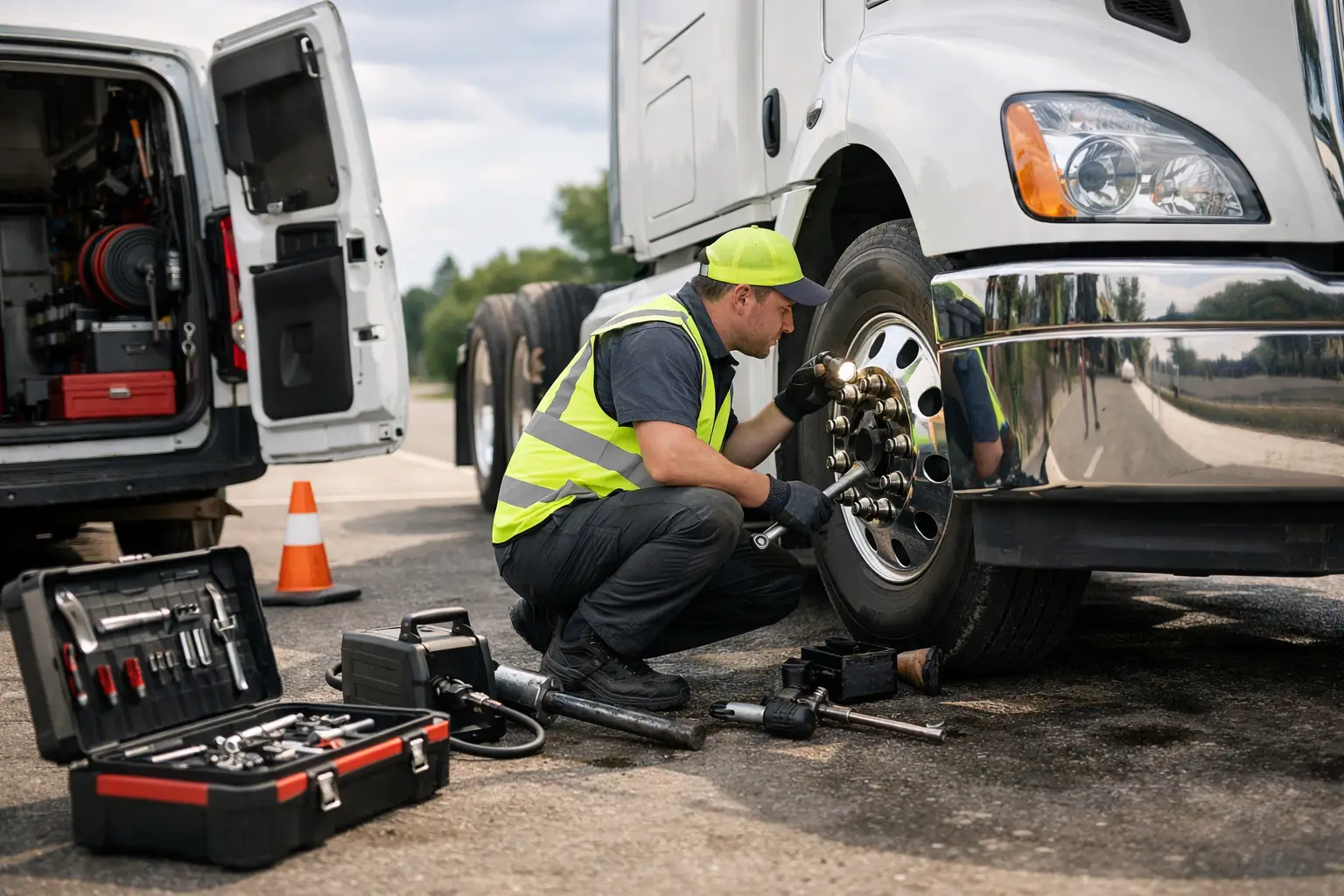
A DOT inspection problem rarely shows up at a convenient time. It hits when a driver is under load, a fleet is trying to hold schedule, or a truck is already parked at a scale, customer site, or roadside turnout. That is where mobile DOT inspection repair matters. When a commercial truck has a compliance-related defect, the fastest path back to legal operation is often an on-site diesel technician who can diagnose the issue, make the repair, and verify that the truck is ready to move.
For owner-operators and fleets, this is not just about fixing a part. It is about protecting hours, freight commitments, and equipment utilization. A truck that cannot pass inspection is not just inconvenienced - it is out of service, losing time and creating pressure on every load behind it.
What mobile DOT inspection repair really covers
Mobile DOT inspection repair is the on-site correction of defects that can cause a commercial vehicle to fail or risk failing a DOT inspection. In the field, that usually means problems tied to safety systems, drivability, emissions-related faults, lighting, air system performance, or visible mechanical issues that draw attention during an inspection.
The exact repair depends on what the officer, scale house, or pre-trip check turns up. Sometimes it is straightforward, like a lighting fault or an air leak that drops system pressure too quickly. Other times the issue takes shop-level diagnostics to identify, especially when warning lights, derate conditions, or emissions faults are involved.
That is why experience with diesel trucks matters. A roadside technician is not there to guess. The job is to identify the defect fast, determine whether it can be corrected safely on-site, and make the repair that gets the truck back into compliant operating condition.
Why trucks fail inspections in the field
Most inspection-related problems are not random. They build over time and then become impossible to ignore when the truck is examined closely. Air system leaks are a common example. A minor leak may seem manageable during normal operation, but under inspection conditions, pressure loss, slow build time, or brake-related concerns can quickly become a compliance issue.
Lighting and electrical faults are another frequent problem. Marker lights, brake lights, turn signals, wiring damage, and connection failures can all put a truck at risk. These are often repairable on-site, but only if the technician can trace the fault instead of just replacing parts blindly.
Then there are engine and aftertreatment issues. A truck in active fault status, with warning lights, failed regen conditions, or emissions-related drivability problems, can face both performance and compliance trouble. These cases are more technical. The truck may need forced regen support, sensor diagnosis, or repair to a failed component before it can return to work.
Steering and suspension concerns also matter, especially when visible wear, loose components, or handling complaints point to a larger issue. Not every problem can or should be repaired roadside. A qualified mobile diesel repair provider knows the difference between a safe field repair and a condition that requires a more controlled repair environment.
Mobile DOT inspection repair vs. general roadside repair
Not every roadside repair is a DOT inspection repair. The difference is urgency tied to compliance. A truck with a performance issue may still be movable. A truck with an inspection failure or a condition likely to trigger one is dealing with legal operating risk.
That changes the service approach. The technician has to think in terms of inspection standards, safety items, fault validation, and whether the repair actually addresses the reason the vehicle was stopped or flagged. It is not enough to get the engine running smoother or clear a code temporarily. The repair has to hold up under inspection.
For fleets, this distinction matters because a quick patch that does not resolve the underlying defect can create a repeat shutdown a few miles later. For drivers, it matters because time spent waiting on the wrong diagnosis is still lost time.
What a strong mobile repair response looks like
A real mobile DOT inspection repair call starts with accurate information. The driver or fleet contact needs to explain what happened, where the truck is, what warnings or symptoms are present, and whether there is already an identified violation or inspection report. That helps the technician arrive prepared for the likely repair.
Once on site, the first step is confirming the defect instead of chasing assumptions. On modern diesel equipment, that often means electronic diagnostics along with a hands-on inspection of the affected system. Air leaks need to be located. Warning lights need to be read correctly. Electrical faults need proper tracing. If the truck is dealing with an emissions issue, the technician needs to know whether the problem is sensor-related, a regen problem, or a larger aftertreatment failure.
The next step is deciding whether the repair is appropriate for the field. Many compliance-related defects can be repaired on-site. Others can be stabilized, diagnosed, or verified well enough to define the next action clearly. What matters is technical honesty. The wrong call wastes more time than a direct answer.
Common issues that can often be handled on-site
A capable mobile diesel service can often address several high-value inspection-related problems without moving the truck. Lighting and wiring faults are common field repairs, especially when the issue is a failed component, damaged connection, or exposed wiring section.
Air system problems are also frequent roadside calls. That includes certain leaks, valve-related issues, and faults affecting proper brake air performance. These repairs require careful verification because brake and air concerns are not a place for shortcuts.
Engine diagnostics and emissions-related faults can also be handled in many cases. If the issue involves failed regen conditions, sensor faults, or a problem causing warning lights and derate behavior, mobile diagnostics can identify the root cause and support the necessary repair. This is especially valuable when a truck is stuck along the I-35 or I-10 corridor and every hour off the road affects dispatch.
A/C problems are not always thought of as inspection-related, but for many commercial drivers in South Texas, cab heat can become an operational and safety concern fast. While that is a different kind of roadside priority, it often shows up on the same service calls because one mechanical problem rarely waits for another to finish.
When mobile DOT inspection repair saves the most time
The biggest advantage comes when the truck is stranded by a defect that does not require a full facility visit but does require skilled diesel repair. Scale houses, yards, customer docks, rest areas, and roadside shoulders are all places where downtime expands quickly. Waiting hours just to begin diagnosis is what turns a manageable repair into a missed schedule.
Mobile service closes that gap. The technician brings the diagnostic process to the truck, which means the decision-making starts sooner. If the repair can be completed on-site, the truck avoids a longer interruption. If it cannot, the driver and fleet at least get a clear technical answer instead of uncertainty.
That speed matters even more for fleets managing multiple units. One truck delayed by a compliance issue can disrupt appointments, handoffs, and driver hours across a wider route plan. Fast field diagnostics help contain the operational damage.
Choosing the right provider for mobile DOT inspection repair
If the issue is compliance-related, the provider needs more than basic roadside capability. Look for a team that works specifically on commercial diesel equipment, carries proper diagnostic tools, and understands the systems most likely to create inspection trouble - brakes, air, lighting, emissions, and electronic faults.
Availability matters too. Inspection problems do not wait for business hours. A 24/7 response is not a marketing line for trucking operations. It is a practical requirement when loads are moving overnight, early morning, and through weekends.
It also helps to work with a provider that knows the corridor traffic and commercial routes around San Antonio. Trucks running through scale points and high-volume freight lanes do not have much room for delay. TX Road Service is built around that reality, with mobile diesel repair focused on getting commercial vehicles diagnosed and repaired where the problem happens.
The best move after an inspection-related issue
Once a defect appears, speed matters, but accuracy matters more. A rushed guess can turn one violation into a longer outage. The right move is a qualified on-site inspection, a real diagnosis, and a repair that addresses the actual failure.
For drivers and fleets, mobile DOT inspection repair is not about convenience. It is about keeping a truck legal, safe, and productive without giving away a full day to a problem that can be solved where it sits. When the call comes in, the goal is simple - get the truck repaired correctly and get the operation moving again.