Mobile Diesel Repair vs Tow Shop
Mobile diesel repair vs tow shop: see which option cuts downtime, protects loads, and gets commercial trucks diagnosed and repaired faster.
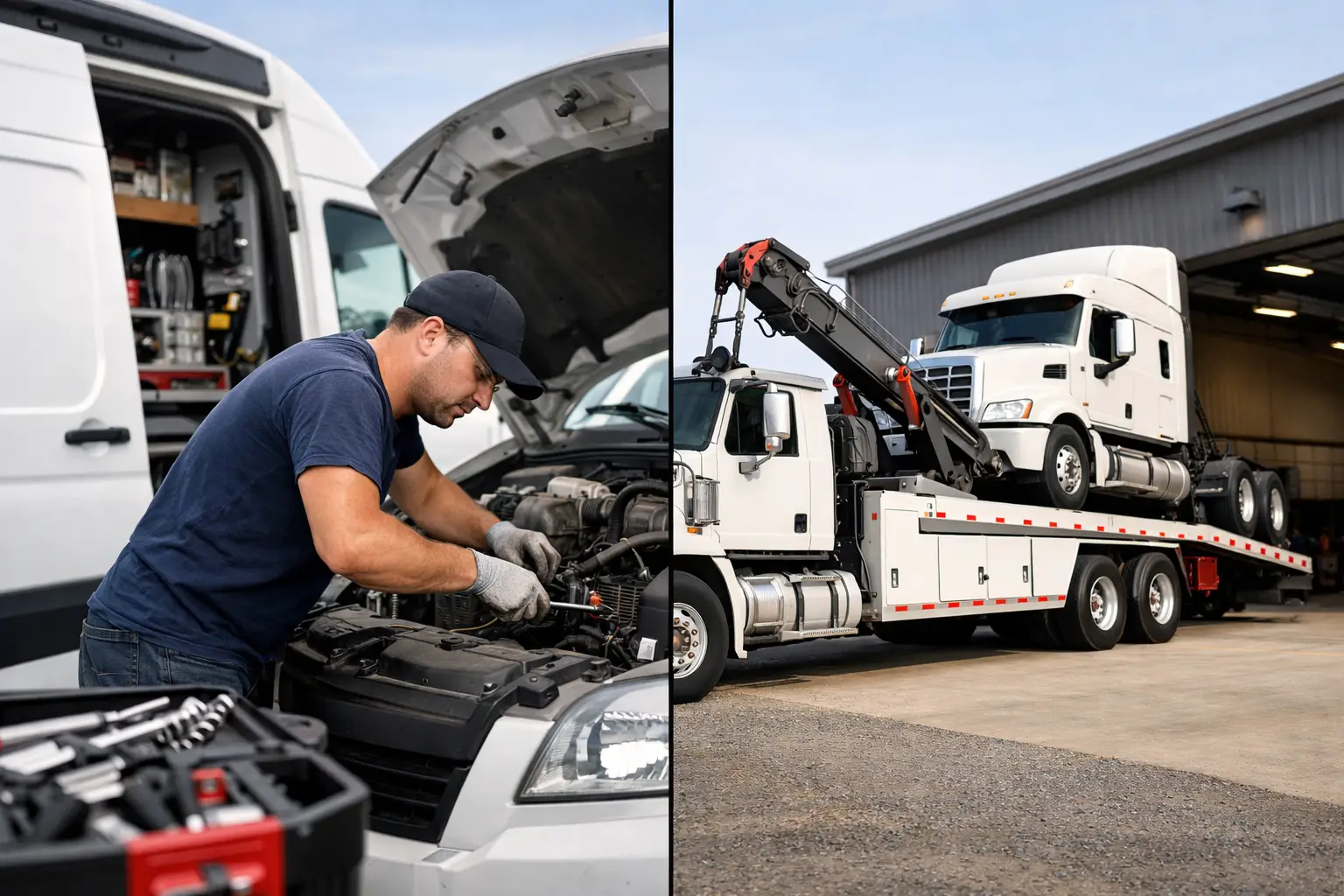
A truck on the shoulder with a derate, no A/C, or an active aftertreatment fault is not a minor inconvenience. It is a schedule problem, a load problem, and sometimes a compliance problem. When the decision comes down to mobile diesel repair vs tow shop, the real question is simple: which option gets the truck diagnosed and repaired with the least operational damage?
For commercial trucks, the answer is often mobile service first. Not every breakdown can be handled on site, and experienced operators know that. But many of the failures that stop a diesel truck or threaten delivery schedules can be diagnosed and repaired where the unit sits. That changes the downtime equation fast.
Mobile diesel repair vs tow shop: what actually changes?
The biggest difference is not just location. It is how the repair process starts.
With mobile diesel repair, the technician comes to the truck, evaluates the failure in the field, and begins diagnostics immediately. That matters when the issue is electrical, emissions-related, air system-related, or tied to drivability. A truck with a failed forced regen, a bad sensor, an air leak, a charging issue, or a no-start condition may not need to be moved before real repair work begins.
A tow shop route adds another operational step before diagnostics even start. The truck has to be recovered, transported, checked in, and worked into the shop flow. For a fleet manager or owner-operator trying to protect delivery timing, every added step matters. The truck is still down while that process plays out.
That is why roadside-capable diesel service is not just about convenience. It is about compressing the time between breakdown and actual wrench time.
When mobile diesel repair is the better call
Mobile service makes the most sense when the problem is serious enough to stop the truck, but still repairable in the field with proper tools, parts access, and diesel diagnostics.
That includes many common roadside failures. Electrical faults are a good example. A truck may crank slowly, fail to start, lose charging, or throw communication faults that shut down normal operation. Those issues often require testing, tracing, and component replacement more than they require a shop bay.
Aftertreatment problems are another major category. DPF issues, failed regens, sensor faults, and derates can sideline a truck fast. In many cases, a technician with the right diagnostic software and diesel experience can determine whether the unit needs a parked regen, sensor replacement, wiring repair, or deeper troubleshooting on site.
Air system faults also fit mobile work well. If a truck cannot maintain air pressure, has a governor issue, or develops a leak that affects safe operation, the repair may be straightforward in the field once the failure point is identified.
A/C failures matter more than some people admit, especially in South Texas. A non-working system may not put the truck on the shoulder immediately, but it can affect driver safety, comfort, and ability to stay productive. If the truck is already parked for another issue, field A/C diagnostics and repair can prevent another interruption later.
For fleets, mobile service also helps when a unit is down at a yard, customer site, or distribution point. Moving the truck is not always the fastest path. Sometimes the fastest path is sending a diesel technician to the truck and fixing the actual problem where it sits.
When a shop makes more sense
There are situations where a shop environment is the right call. A good diesel operation should say that clearly.
If the failure is severe, access is limited, or the truck needs major disassembly, a controlled shop setting may be the better route. The same applies when multiple systems have failed and the repair is likely to expand once teardown begins. Some jobs need the space, support equipment, and extended labor time that only a fixed location can provide.
There is also the question of roadside safety. If the truck is in a dangerous position, blocked in by traffic conditions, or sitting where field work cannot be performed safely, the repair decision changes. Safety comes first, and any serious service provider knows that.
So this is not a blanket claim that every truck should always be repaired on site. It depends on the failure, the location, and the repair scope. What matters is making the call based on diesel repair realities, not assumptions.
Downtime is where mobile service wins most often
For most commercial operations, downtime is the deciding factor in mobile diesel repair vs tow shop.
A truck that can be diagnosed on location avoids several delays at once. It avoids waiting for transport. It avoids intake delays. It avoids sitting in line before a technician can even verify the fault. In emergency roadside work, that time is often more damaging than the repair itself.
This is especially true on high-traffic corridors around San Antonio, I-35, I-10, I-37, and surrounding freight routes where schedules are tight and missed windows have real consequences. If a repair can be completed where the truck stopped, the unit gets back into service faster and with less disruption to the route.
Fleet managers understand this immediately. The goal is not to move a disabled asset from one location to another. The goal is to restore operation as quickly and safely as possible. Those are not always the same thing.
Diagnostics matter more than location
A common mistake is thinking roadside service is only for simple mechanical problems. That is outdated thinking.
Modern diesel trucks fail in ways that demand real diagnostic capability. Engine management, emissions systems, sensors, electrical networks, and fault-based derates are not solved with guesswork. Whether the truck is on the shoulder, at a customer dock, or in a yard, the technician needs to read the system, test components, and confirm the failure before replacing parts.
That is where the quality of the service provider matters. If the mobile technician has shop-level diagnostic capability, the roadside call becomes much more valuable. You are not just getting someone who can look at the truck. You are getting someone who can properly diagnose a diesel platform under field conditions and make a repair decision based on data.
For truck operators, that means fewer wasted hours and fewer unnecessary parts changes. For fleets, it means better control over uptime and less disruption across the board.
Mobile diesel repair vs tow shop for common truck problems
The better option often comes down to the type of failure.
A no-start, battery and charging fault, starter issue, air leak, sensor failure, regen problem, or many drivability complaints can often be addressed through mobile service first. These are the kinds of failures that stop a truck without necessarily requiring a full shop environment.
If the issue points to extensive internal damage, major component replacement, or repair conditions that cannot be handled safely on site, a shop becomes more practical. The key is not to assume either outcome too early.
A strong mobile diesel operation helps by making that determination quickly. If the truck can be repaired where it sits, work starts there. If the failure needs more than roadside service can reasonably provide, the operator gets a clear direction based on actual diagnostics.
That kind of triage is valuable by itself. It keeps decision-making grounded in the truck’s real condition instead of wasting hours on the wrong first move.
What commercial operators should ask first
When a truck goes down, the first question should not be, "Where can I send it?" The better question is, "Can this unit be diagnosed and repaired on site by a diesel specialist?"
That shift in thinking matters because many roadside failures are not transportation problems. They are repair problems. If the right technician can access the truck, run diagnostics, and complete the work on location, moving the unit first only adds delay.
For owner-operators, that can mean protecting the load and saving a day that would otherwise be lost to process. For fleets, it can mean getting an asset back into rotation without turning one breakdown into a larger scheduling mess.
TX Road Service is built around that reality - 24/7 emergency roadside diesel repair for commercial trucks that need real diagnostics and real repair support where the breakdown happens.
The smartest move is usually the one that gets a qualified diesel tech to the truck fast, confirms the fault, and keeps the next decision based on facts. When uptime matters, that is how you protect the run.