How to Diagnose Diesel Overheating on the Road
Learn how to diagnose diesel overheating before it damages your engine. Check coolant, airflow, pressure, fan operation, and fault codes on the road safely.
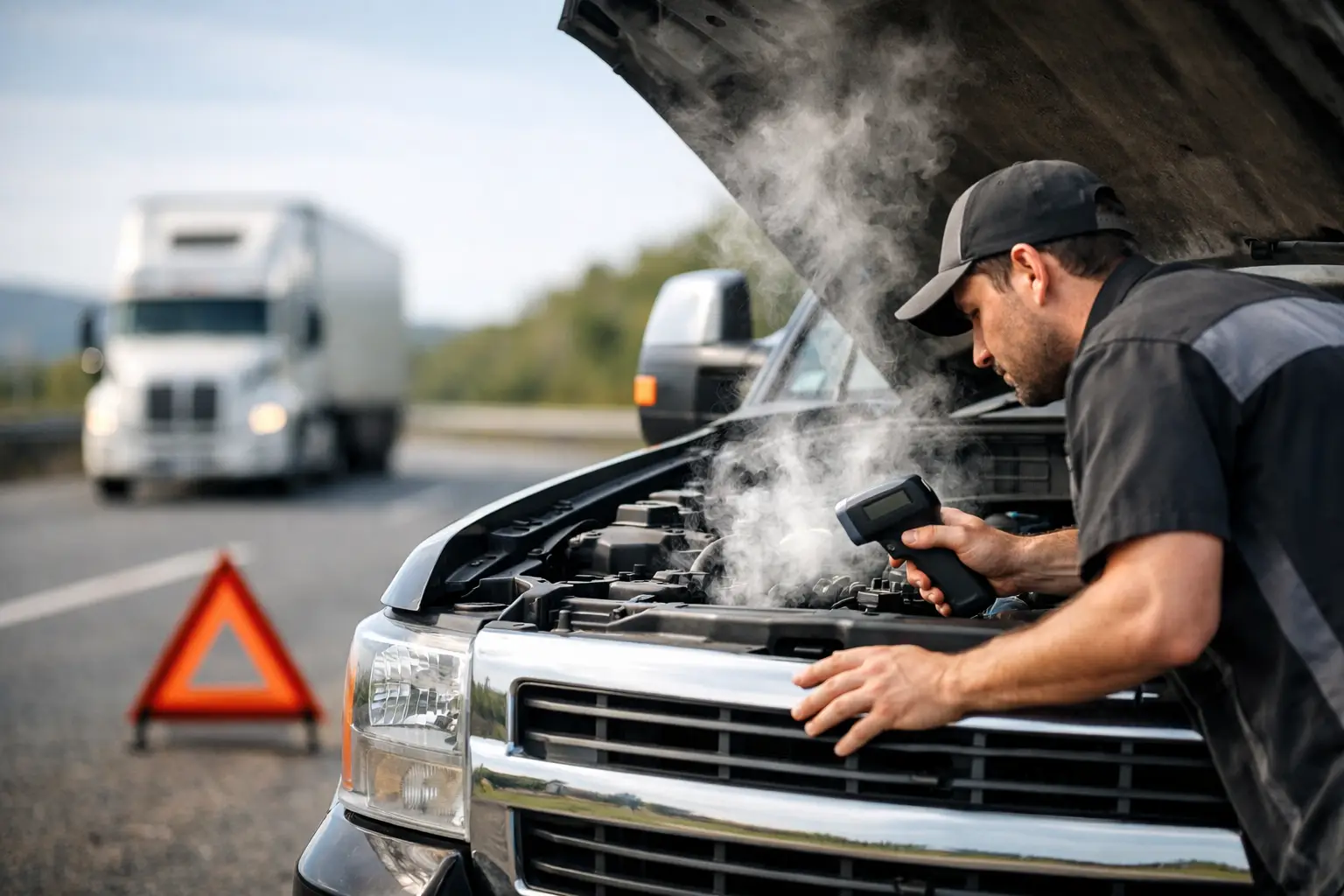
A temperature gauge climbing past its normal range while you are loaded on I-35 is not a warning to ignore until the next stop. It is a decision point. Knowing how to diagnose diesel overheating can help protect the engine, prevent a roadside shutdown, and give a technician useful information before the repair begins.
A modern diesel can run hot for several reasons, and the gauge alone does not identify the failed part. Low coolant, restricted airflow, a weak fan clutch, a sticking thermostat, a pressure leak, an EGR cooling problem, or a sensor issue can all produce similar symptoms. The job is to verify what the engine is doing, isolate the system involved, and avoid turning a manageable repair into engine damage.
First, Protect the Engine and the Driver
If the coolant temperature climbs rapidly, a warning lamp appears, power drops off, or steam is visible, reduce load immediately. Back out of the throttle, turn off the A/C if conditions allow, and find a safe place to stop. A hard pull, high ambient temperature, and slow traffic can push a marginal cooling system over the edge quickly.
Do not remove a radiator cap or coolant reservoir cap while the engine is hot. The cooling system is pressurized, and hot coolant can cause serious burns. Let the engine cool before checking fluid level or opening any part of the system.
There is also a difference between a brief temperature rise and an actual overheating event. A truck may run warmer on a steep grade or during a forced regen, then settle back to normal once the load changes. If the temperature stays elevated, continues climbing, boils coolant out, or derates the engine, treat it as a real fault.
How to Diagnose Diesel Overheating: Start With the Pattern
The operating pattern often points toward the right system before any tools come out. Ask what the truck was doing when it started running hot.
An engine that overheats mainly at idle or in slow traffic often has an airflow problem. The fan may not be engaging, the fan clutch may be weak, the shroud may be damaged, or debris may be blocking the radiator, charge air cooler, condenser, or oil cooler stack.
An engine that overheats under a heavy pull but recovers when coasting may have low coolant, restricted radiator flow, a thermostat that is not opening fully, a water pump issue, or combustion gases entering the cooling system. A truck that runs hot during or after repeated regens may also need emissions-system diagnostics, especially if high exhaust temperatures and engine derate complaints are present.
If the gauge jumps from normal to hot with no other signs of overheating, do not assume the engine is safe. A faulty coolant temperature sensor, damaged wiring, poor ground, or a scan-data problem can create a false reading. But it takes diagnostic equipment to confirm whether the reading is false or whether the truck truly has a cooling-system failure.
Check Coolant Level, Condition, and Evidence of Leaks
Once the engine is cool enough to inspect safely, start with the coolant reservoir. Low coolant is one of the most common causes of overheating, but the important question is why the level dropped.
Look for dried coolant residue around hose connections, the radiator, surge tank, water pump, thermostat housing, heater hoses, and engine components. Dried residue can be white, pink, orange, or green depending on the coolant used. Check beneath the truck for fresh drips, but remember that a pressure leak may only show up when the engine is hot and the system is under load.
Inspect the coolant itself. Oil contamination, heavy rust, sludge, or floating debris can indicate a larger problem. Coolant that looks clean does not rule out a pressure leak, restricted flow, or internal engine issue, but contaminated coolant is a clear reason for a deeper inspection.
Do not top off a hot system with cold water. Rapid temperature changes can stress hot components, and plain water may not meet the coolant requirements for the engine. If coolant loss is substantial, the priority is finding the leak and pressure-testing the system rather than repeatedly adding fluid and continuing the run.
Inspect Airflow Through the Cooling Stack
Heavy-duty trucks collect road debris, dust, bugs, oil mist, and trash between the heat exchangers. The outside of the radiator can look acceptable while the space between the charge air cooler, A/C condenser, and radiator is packed with debris. That restriction reduces heat transfer, especially in Texas heat, slow traffic, and loaded operation.
With the engine off and cool, inspect the cooling stack from both sides as access allows. Look for bent fins, mud buildup, plastic bags, leaves, and oily dirt that holds debris in place. Check that the fan shroud is secure and intact. A missing or damaged shroud can reduce the fan's ability to pull air through the radiator at low speed.
Avoid using aggressive pressure directly against fins. Bent fins reduce airflow further. Proper cleaning method depends on the truck's cooling-stack design and how much contamination is present.
Verify Fan Clutch and Fan Operation
A fan that does not engage when the engine gets hot is a major cause of overheating at idle, in stop-and-go traffic, and during slow pulls. On electronically controlled systems, fan engagement may depend on ECM commands, coolant temperature data, A/C pressure, intake temperature, and fault conditions.
Listen for a noticeable increase in fan noise as temperature rises or when the fan is commanded on through diagnostic software. The sound alone is not proof, but it is useful evidence. A technician should verify commanded fan state versus actual operation, inspect electrical connections and air supply where applicable, and check the clutch or fan drive for mechanical failure.
A constantly engaged fan is not usually the direct cause of overheating, but it can indicate a control issue and costs fuel. A fan that never engages when commanded is the urgent problem.
Test System Pressure and Coolant Flow
Cooling systems need pressure to raise coolant boiling point. A weak cap, cracked reservoir, loose clamp, split hose, or small radiator leak may hold enough coolant during a visual inspection but fail once temperature and pressure increase.
A pressure test can expose external leaks that are not visible cold. It can also help determine whether the system loses pressure after the engine is shut down. On the road, this is one reason shop-level mobile diagnostics matter: the right test equipment can separate a minor hose leak from a more involved cooling-system failure.
Coolant flow must also be evaluated. A thermostat stuck partially closed can allow normal temperatures during light operation but overheat under load. A damaged water pump impeller, slipping drive component, internal blockage, or restricted radiator can cause the same pattern. Infrared temperature checks across the radiator and hoses can help identify uneven flow, but results need to be interpreted alongside scan data and pressure testing.
Use Fault Codes and Live Data, Not Guesswork
A check engine light is not required for a diesel to overheat, but stored faults can provide critical direction. Scan for active and inactive codes related to coolant temperature, fan control, EGR temperature, coolant level, thermostat performance, derates, and emissions faults.
Live data is more valuable than codes alone. Compare reported coolant temperature with infrared readings where appropriate. Check fan command, fan speed if available, intake air temperature, oil temperature, EGR-related temperatures, and engine load. A technician can determine whether the ECM sees an overheating condition, whether it has requested fan operation, and whether a sensor or wiring issue is distorting the picture.
Do not replace a thermostat, fan clutch, or temperature sensor based only on one symptom. Diesel cooling systems are interconnected, and parts swapping can waste a load day while the actual restriction or pressure leak remains.
When the Problem Needs Roadside Diagnostics
Stop operating the truck and arrange professional diesel support if coolant is boiling out, steam is present, the engine derates, oil temperature rises with coolant temperature, coolant disappears without an obvious external leak, or the truck repeatedly overheats after cooling down. Those signs can point to failures that require pressure testing, fault-code analysis, fan-control checks, and experienced inspection.
For commercial trucks in San Antonio and along the surrounding freight corridors, TX Road Service provides 24/7 emergency roadside repair and shop-level diesel diagnostics where the truck is down. A mobile technician can evaluate the cooling system, fan operation, fault data, and related diesel systems without waiting for normal shop hours.
The best next move is simple: protect the engine first, record what happened, and get the cooling system tested before the next loaded pull turns a temperature warning into a major repair.