Forced Regen vs DPF Replacement
Forced regen vs DPF replacement - know when a parked regen can save the filter and when damage, ash load, or failure means replacement is the right fix.
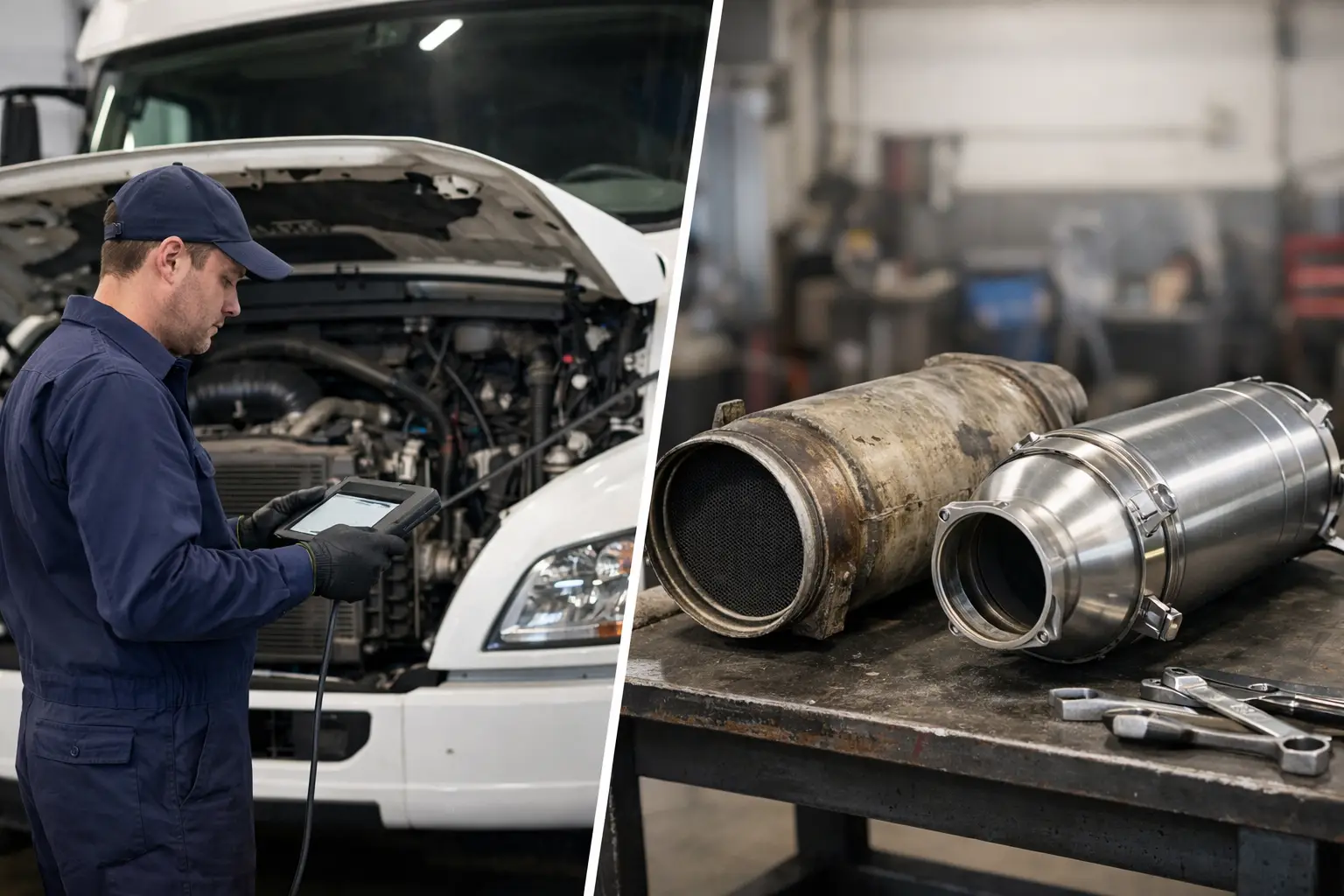
A dash warning for the DPF is one problem. A truck that drops power, starts derating, or refuses to complete a regen on a loaded route is a different kind of problem. When drivers and fleet managers weigh forced regen vs DPF replacement, the real question is not which option sounds cheaper or faster. It is which repair actually matches the condition of the emissions system and gets the truck back to dependable service.
For a working diesel truck, guessing wrong here wastes time and can turn a repairable issue into a repeat breakdown. Sometimes a forced regen clears the soot load and restores normal operation. Sometimes the filter is already at the end of its life, restricted by ash, cracked internally, or part of a larger failure involving sensors, injectors, turbo operation, or the DEF system. That is why the right answer starts with diagnostics, not assumptions.
Forced regen vs DPF replacement: what is the real difference?
A forced regen is a controlled process that raises exhaust temperature high enough to burn accumulated soot out of the diesel particulate filter. On many trucks, this is done through a parked regen command or with diagnostic equipment when the truck will not complete regeneration on its own. It is a cleaning event, not a rebuild, and not a cure for every DPF-related fault.
DPF replacement is different. That means the filter itself is no longer serviceable in the truck's current condition. It may be physically damaged, excessively loaded with ash, melted from high exhaust temperatures, oil contaminated, coolant contaminated, or restricted to the point that regeneration will not solve the issue. Replacement addresses a failed component. Regen only addresses burnable soot.
That distinction matters on the side of the road. If the root problem is soot accumulation from interrupted duty cycles or repeated shutdowns, a forced regen may be the right move. If the filter substrate is damaged or the truck has an upstream engine issue that keeps overloading the DPF, forcing a regen can waste valuable time and increase heat stress in an already failing system.
When a forced regen makes sense
A forced regen is most effective when the filter is loaded with soot but still structurally sound. This often shows up on trucks that spend too much time idling, running short intervals, or working in stop-and-go conditions that never let the exhaust stay hot long enough for passive or automatic regeneration.
In those cases, the truck may still have a usable DPF. The system just has not had the operating conditions needed to burn soot off properly. A technician can verify differential pressure readings, temperature sensor data, fault codes, and engine conditions to determine whether the truck is a good candidate for a forced regen.
If the engine is otherwise healthy, the doser is functioning, the sensors are reading correctly, and the soot load is within a recoverable range, a forced regen can get the truck back in service without replacing the filter. For many operators, that is the best-case outcome because it restores function quickly and confirms whether the system can still maintain itself after the event.
But even in a successful regen, the job is not done until the reason for the soot buildup is understood. A truck that keeps coming back with DPF faults usually has a pattern behind it. Excessive idle time, failed sensors, bad EGR performance, injector issues, or incomplete prior regens can keep loading the filter until the next shutdown turns into another roadside call.
When DPF replacement is the better decision
There are times when replacement is the only solid repair. The most common one is ash loading. Soot burns off during regeneration. Ash does not. It builds over time from normal engine operation and eventually fills space in the filter that regeneration cannot recover. Once ash loading reaches a critical level, backpressure stays high even after regen attempts.
Replacement also becomes necessary when the DPF is physically damaged. A cracked substrate, melted core, or contamination from oil or coolant changes the filter from a restricted component to a failed one. In that condition, forcing a regen is not a fix. It may not complete, and if it does, it still will not restore the structural integrity of the filter.
Another red flag is repeated failed regens paired with severe derate, high differential pressure, or fault codes that point to conditions outside the DPF itself. If the truck has been commanded to regen multiple times without lasting results, the issue may be beyond soot load. At that point, the decision shifts from trying to save time to preventing more downtime.
For fleet managers, this is where good diagnostics protect the operation. Replacing a DPF too early costs money and takes a unit out of rotation unnecessarily. Waiting too long on a filter that is already done can trigger more failures, more derate events, and more missed miles.
Why diagnostics decide forced regen vs DPF replacement
The emissions system does not work alone. The DPF depends on proper fuel delivery, exhaust temperatures, sensor accuracy, turbo performance, EGR function, and in many systems, DEF operation. That means a DPF warning light is not enough to decide the repair path.
A proper diagnostic process checks the full picture. Differential pressure across the filter helps show how restricted it is. Exhaust gas temperature sensors show whether the truck can achieve and hold regen temperatures. Fault history tells whether the truck has been struggling with repeat regen failures or intermittent sensor problems. Visual inspection can reveal contamination or signs of overheating.
This is where roadside experience matters. On a commercial truck, you do not need a generic answer. You need someone who can tell the difference between a truck that needs a controlled regen now and a truck that is warning you the filter is already beyond recovery. A rushed call to force a regen without checking the supporting systems can send the truck right back into derate a few hours later.
The risks of picking the wrong repair
If a forced regen is attempted on a truck with a damaged or severely restricted DPF, the process may fail outright or create excessive heat in a filter that cannot handle it. That can worsen internal damage and leave the truck in a deeper no-power condition than it started with.
On the other side, replacing a DPF when the real problem is a faulty sensor, doser issue, or poor engine performance will not keep the truck fixed. The new filter can load up again if the root cause stays in place. That is one of the most expensive mistakes in emissions repair - changing the filter while ignoring the reason it failed.
For owner-operators, the wrong call hits revenue fast. For fleets, it turns into repeat service events and preventable downtime across multiple units with similar duty cycles. Either way, the truck needs a repair strategy based on data, not guesswork.
What truck operators should watch for before failure gets worse
Most DPF problems do not appear out of nowhere. The warning signs usually start with more frequent regen requests, poor throttle response, reduced fuel economy, or an engine fan running harder than normal during emissions events. Then come warning lights, derate conditions, or a truck that cannot complete a parked regen.
If the truck has already had one or more interrupted regens, that matters. If it is idling for long stretches between stops, that matters too. If there are signs of oil consumption, coolant loss, or black smoke under load, that raises the stakes because those conditions can contaminate or overload the DPF faster than normal use.
The best move is early diagnostics before the truck reaches a hard derate or shutdown condition. That matters even more on the I-35 and I-10 corridors around San Antonio, where missed hours turn into missed dispatch windows fast.
The practical answer to forced regen vs DPF replacement
There is no honest one-size-fits-all answer to forced regen vs DPF replacement because the right repair depends on what is inside the filter and what is happening upstream in the engine and emissions system. A forced regen is the right tool when soot load is the issue and the system can still support a normal burn cycle. Replacement is the right move when ash load, contamination, physical damage, or repeated failure has pushed the DPF past recovery.
What matters most is making that call accurately and quickly. For a truck sitting on the shoulder, at a yard, or on a delivery schedule, downtime is not just an inconvenience. It is lost work, lost time, and more pressure on the next load. A solid technician does not sell one answer for every truck. He checks the data, verifies the failure, and makes the repair that gives the unit the best chance of staying on the road.
If your truck is showing DPF faults, refusing regen, or dropping into derate, treat it like a system problem, not just a warning light. The sooner the condition is diagnosed correctly, the better your odds of fixing it once and getting back to work.