Emergency Diesel Truck Repair San Antonio
Emergency diesel truck repair San Antonio for breakdowns, diagnostics, DPF issues, A/C failures, and roadside service 24/7 for fleets.
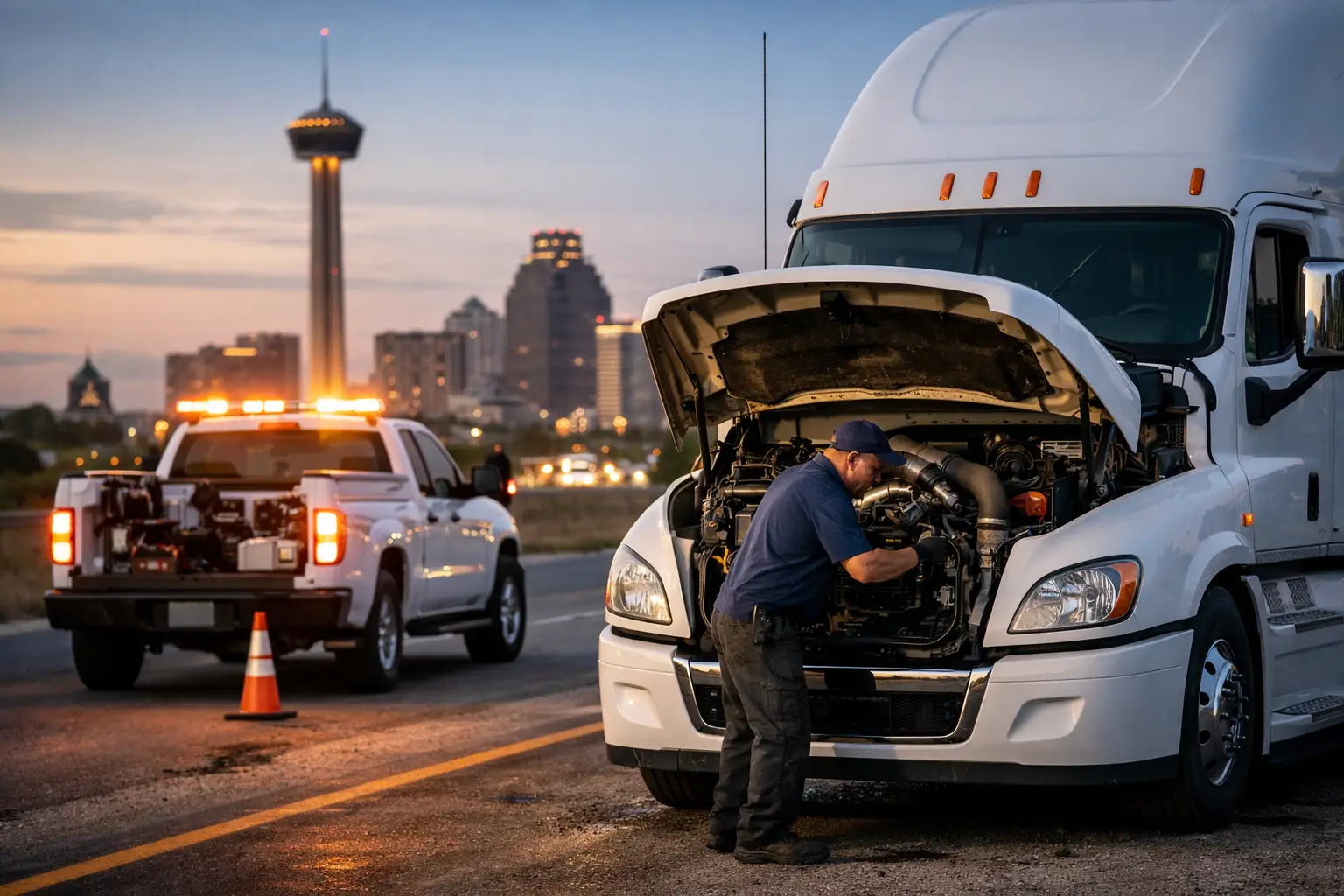
A loaded truck on the shoulder outside San Antonio is not a small problem. Every hour down means missed delivery windows, driver stress, possible compliance issues, and money bleeding out while the truck sits. When you need emergency diesel truck repair San Antonio drivers and fleet operators can count on, the real priority is simple: get a qualified diesel technician to the truck fast, diagnose the issue correctly, and make the repair on site whenever possible.
That is what serious roadside service is supposed to do. Not guess. Not tell you to wait until morning. Not send a general mechanic who is not equipped for heavy-duty diesel systems. Commercial trucks need mobile repair support built around the realities of breakdowns, emissions faults, air system failures, electrical issues, and drivability problems that happen in the middle of a run.
What emergency roadside diesel service needs to do
A true emergency roadside response is about more than showing up with tools. The technician has to be ready for the kinds of failures that actually stop diesel trucks in San Antonio traffic, on I-10, I-35, Loop 1604, or at a customer yard. That means shop-level diagnostics in the field, experience with commercial diesel platforms, and the ability to make repair decisions quickly.
Some problems are obvious, like a blown hose, air leak, dead batteries, or a no-start condition. Others are not. A forced derate, regen problem, sensor failure, electrical fault, or A/C issue in extreme South Texas heat can put a truck out of service just as effectively as a hard mechanical failure. If the tech cannot properly diagnose those systems on site, the truck loses more time than it should.
The best roadside service reduces downtime by handling the first call the right way. That starts with asking the right questions, dispatching with the right equipment, and treating the breakdown like an operational emergency instead of a routine appointment.
Why emergency diesel truck repair in San Antonio is different
San Antonio creates its own kind of pressure for commercial trucking. The heat is hard on cooling systems, batteries, belts, and A/C performance. Traffic around major freight corridors can turn a minor issue into a major delay. And for trucks moving tight schedules, waiting for a tow and then waiting again at a shop is often the most expensive option on the table.
That is why mobile service matters here. If a truck can be repaired at the roadside, in a lot, at a warehouse, or at a terminal, that saves hours and sometimes an entire shift. For owner-operators, that can be the difference between salvaging the load and losing the day. For fleets, it protects utilization and keeps dispatch from scrambling to cover equipment that should already be moving.
There is also the compliance side. A truck that is stopped for a mechanical issue may also be facing DOT concerns, especially if the problem affects drivability, emissions, or scale-related inspection items. Fast response is important, but accurate repair is what gets the unit back into service without creating a second failure down the road.
The breakdowns that most often require emergency diesel truck repair San Antonio
Roadside diesel work is rarely one thing. It covers a wide range of systems, and each one affects uptime in a different way. In practice, the most urgent calls tend to fall into a few categories.
No-start and starting system failures are common because they stop everything immediately. Batteries, charging systems, starter issues, damaged cables, and electrical faults all have to be checked in a specific order. Throwing parts at a no-start truck wastes time. Good mobile diagnostics do not.
Air system problems are another major source of emergency calls. If the truck will not build or hold air, it is not going anywhere safely. A roadside technician needs to isolate leaks, evaluate valves and lines, and determine whether the repair can be completed on site or if a larger system issue is involved.
Then there are drivability and performance faults. Loss of power, shutdown warnings, sensor issues, fuel delivery problems, and engine fault codes can leave a truck limping, derated, or fully disabled. These are exactly the situations where shop-level diagnostics on a service truck make a difference.
DPF and regen issues are especially common on modern diesel equipment. A failed regen, soot overload, sensor malfunction, or emissions-related derate can stop a run fast. Not every DPF problem can be solved the same way, and that matters. Sometimes the right move is a parked regen and system check. Sometimes there is an underlying fault that has to be corrected first or the problem will come right back.
A/C failures also become urgent faster than some people expect. In San Antonio heat, a non-working A/C system is not just uncomfortable. For a driver waiting on a repair, idling in traffic, or trying to finish a route safely, cab cooling can become a real operational issue. A roadside diesel technician who can diagnose and repair heavy-duty A/C systems adds real value in this market.
What fast diesel diagnostics should look like on the roadside
Speed matters, but speed without diagnosis creates repeat failures. A proper roadside call starts with getting clear information from the driver or fleet contact. What happened first, what warnings showed up, whether the unit still cranks or moves, and whether the truck is loaded all affect the response.
Once on site, the technician should verify the complaint, inspect the obvious failure points, and run the appropriate diagnostics for the truck's symptoms. On a modern diesel truck, fault codes are only part of the picture. The tech also needs to understand how those codes relate to actual system conditions.
That is where experience shows up. A code may point to a sensor, but the actual fault may be wiring, contamination, low voltage, pressure loss, or a related component causing a false reading. A less experienced service call can turn into unnecessary parts replacement. An experienced diesel roadside specialist works the problem logically and aims to fix the cause, not just the warning light.
Mobile repair versus towing to a shop
There are situations where towing is unavoidable. Major internal engine damage, structural failures, or repairs that require extensive teardown may need a full shop environment. But many emergency calls do not rise to that level.
That is the trade-off fleets and drivers have to evaluate quickly. If the issue can be diagnosed and repaired on site, mobile service usually wins on time and cost. You avoid towing expense, avoid waiting in line at a shop, and often get the truck back in service much faster.
The key is working with a provider that knows where mobile repair makes sense and where it does not. Overpromising wastes time. So does sending a truck straight to tow when the issue could have been resolved roadside in a fraction of the time. The right approach is practical, not optimistic.
What commercial drivers and fleets should expect from 24/7 service
A 24/7 diesel roadside company should operate like it understands freight. That means after-hours availability is real, not just voicemail. It means the dispatch process is direct, the ETA is clear, and the technician arrives prepared for commercial truck work.
Drivers should expect communication that respects the situation. If a repair can be made roadside, that should be stated clearly. If the truck needs further service, that should be explained without guesswork. Fleet managers need the same thing, plus confidence that the diagnosis is credible enough to make dispatch decisions around.
This is also where specialization matters. Commercial diesel systems are not the same as light-duty automotive work. Emissions components, air systems, electrical faults, and heavy-duty A/C all require a different level of experience. A provider like TX Road Service is built around that need, with mobile diesel support focused on keeping commercial equipment moving in and around San Antonio.
Choosing the right emergency diesel truck repair in San Antonio
When the truck is down, nobody wants a long sales pitch. What matters is whether the service can respond, diagnose, and repair under pressure. Look for a company that understands heavy-duty diesel equipment, offers true roadside capability, and handles the repair categories that most often take trucks out of service.
That includes mobile diagnostics, DPF and regen support, A/C repair, no-start issues, air system problems, and compliance-related service needs. It also means understanding that not every call ends the same way. Some units need immediate roadside repair. Some need temporary correction to move safely. Some need a clear recommendation that prevents bigger damage.
The common thread is downtime control. Good emergency service protects the schedule, the load, and the equipment at the same time. In a market like San Antonio, where delays stack up fast, the right roadside diesel response is not a convenience. It is part of staying operational.
If your truck is stuck on the shoulder, parked at a shipper, or down in a yard after hours, the best next step is simple: get a diesel roadside technician involved before a short delay turns into a lost day.