DPF Regen Service Roadside for Diesel Trucks
DPF regen service roadside helps diesel trucks clear soot fast, restore power, and avoid downtime with on-site diagnostics and repair support.
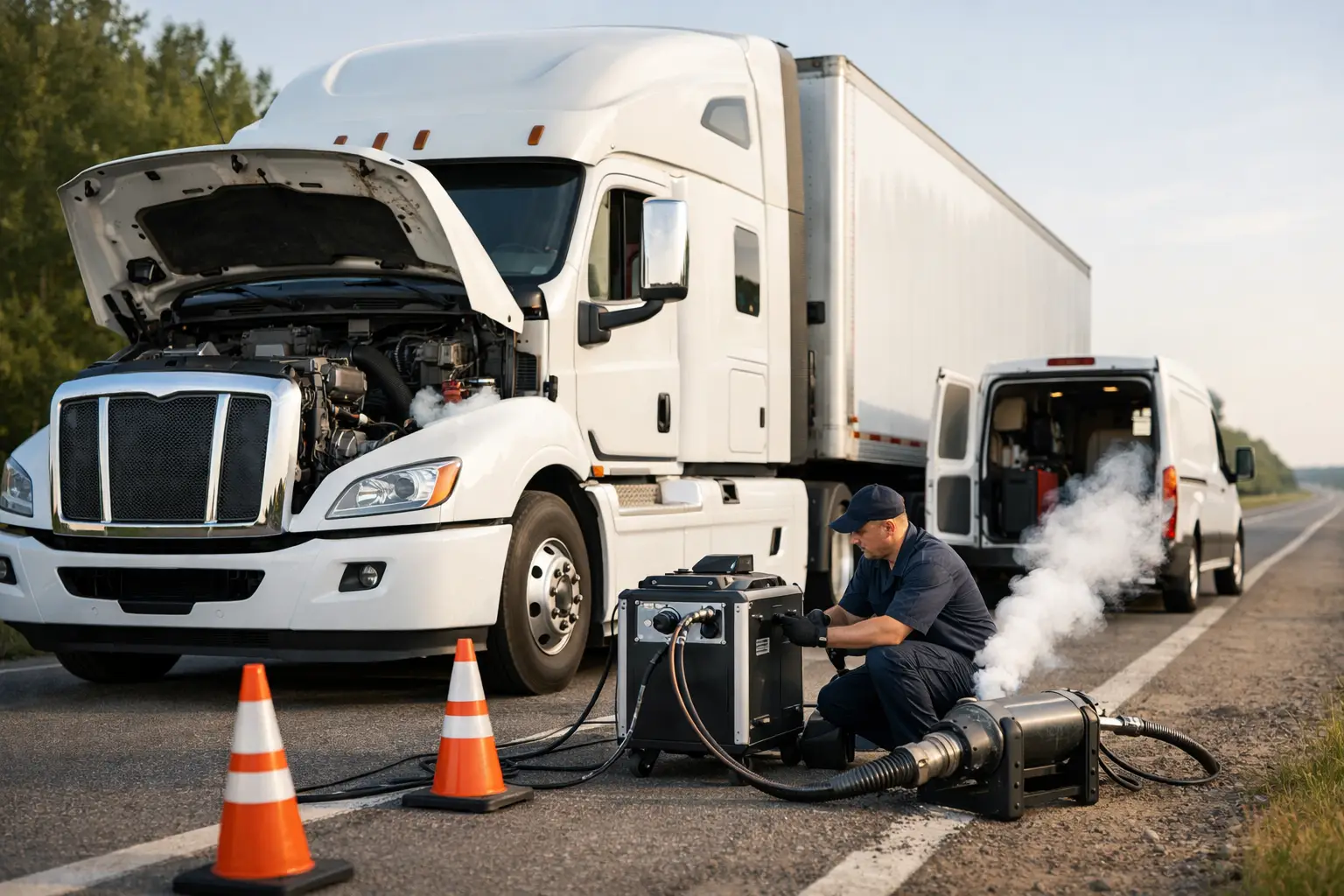
A parked truck with a derate warning is not just an inconvenience - it is lost time, missed appointments, and pressure that keeps building by the minute. When you need DPF regen service roadside, the real question is not whether the filter is full. It is whether the truck can complete a safe regen where it sits, or whether a deeper emissions fault is keeping it from recovering.
For commercial drivers and fleets, that distinction matters. A forced regen is not a magic reset button. If the root cause is still active, the truck may refuse to regen, fail midway through, or drop right back into a fault condition after the process ends. That is why roadside DPF work has to start with diagnostics, not guesswork.
What DPF regen service roadside actually means
A diesel particulate filter traps soot as part of the emissions system. Under normal operation, the engine management system burns that soot off during regeneration. But trucks that spend too much time idling, run short routes, develop sensor faults, or have air flow and fuel delivery issues can stop completing that cycle. When that happens, soot load rises, dashboard warnings appear, and eventually the truck may derate or shut down regeneration altogether.
DPF regen service roadside means a mobile diesel technician comes to the truck, connects diagnostic equipment, checks fault codes and live data, and determines whether the truck can complete a parked regen safely on-site. If it can, the tech manages that process and verifies whether the system is returning to normal. If it cannot, the next step is identifying what is blocking regeneration.
That is the part many drivers run into on the shoulder or at a shipper. The truck says it needs a regen, but the real failure may involve a bad differential pressure sensor, a failed exhaust temp sensor, a dosing issue, wiring damage, or a problem upstream that is creating excess soot in the first place.
Why a truck fails regen in the first place
A full DPF is often the result, not the cause. The emissions system depends on accurate sensor readings, proper exhaust temperature, and engine conditions that support clean burn-off. When one part of that chain breaks down, regen performance follows it.
Idle-heavy operation is a common factor. So are repeated stop-and-go routes and trucks that do not stay under load long enough to complete passive or active regeneration. But operating pattern is only part of the story. If the EGR system is not behaving correctly, if an injector issue is causing poor combustion, or if a sensor is feeding bad data to the ECM, the truck may either overproduce soot or block regen for protection reasons.
That is why a roadside technician has to read the truck, not just the dash light. Two trucks can show the same warning and need completely different repairs.
When roadside DPF regen makes sense
Roadside service makes sense when the truck is stranded or at risk of derate, but the condition appears stable enough for diagnostic work and controlled regen at the location. In many cases, that saves a major amount of downtime because the issue can be verified and corrected without waiting for a bay to open somewhere else.
A proper roadside response usually starts with fault code retrieval and system checks. The technician looks at soot load, ash load if available, exhaust temperature data, pressure readings across the filter, and any active faults tied to the aftertreatment system. If conditions are within range and there are no hard faults preventing the process, a parked regen may be performed.
If the truck completes regen and the readings normalize, the driver may be able to return to operation with a clear understanding of what caused the event. If regen is blocked, aborted, or the values do not recover, that points to an active issue that needs repair before the truck is dependable again.
What a technician checks before forcing a regen
Forcing regeneration without verifying the system is how time gets wasted. It can also put more heat into a system that is already failing for another reason. A qualified mobile diesel tech will typically confirm that the truck has no critical faults that prohibit regen, that exhaust temperatures can rise as expected, and that pressure readings make sense relative to actual filter loading.
The inspection may also include the basics that get overlooked in a hurry. Wiring damage, loose connectors, damaged sensor ports, exhaust leaks, and contamination around emissions components can all change the result. A truck that has been limping through multiple warning stages may have more than one issue stacked on top of the original problem.
This is where shop-level diagnostics on the roadside matter. You are not just trying to turn a light off. You are trying to determine whether the truck is fit to keep working.
DPF regen service roadside is not always enough
There are times when roadside regen is the right move, and there are times when it is only one part of the fix. If the DPF is overloaded beyond what a parked regen can clear, if ash accumulation is at the end of service life, or if another engine or aftertreatment fault is still present, the truck may need more than regeneration.
That can include replacing failed sensors, repairing wiring faults, addressing dosing problems, correcting air flow issues, or resolving engine conditions that are driving excessive soot production. In some cases, the truck completes regen but still shows poor differential pressure or repeated fault return. That is a sign the system needs more than a one-time burn cycle.
The trade-off is simple. A quick regen can get a truck moving again when the system is otherwise healthy. But when the underlying failure is ignored, the same truck often ends up right back on the roadside with a harder fault and less room to recover.
Common signs the problem is bigger than a routine regen
If the truck has repeated regen requests in a short period, active emissions codes that come back immediately, heavy smoke, noticeable power loss, poor fuel economy, or trouble reaching normal exhaust temperatures, there is a good chance the DPF event is tied to something larger. A truck that will not enter regen at all is another strong signal.
Fleet managers see this pattern often with units that have been idling through yard time, stopping and starting all day, or carrying a known sensor issue that kept getting pushed down the schedule. Eventually the truck stops tolerating it. By then, the call is urgent.
A technician who understands heavy-duty diesel emissions systems can separate a one-time soot load event from a recurring reliability problem. That saves time now and prevents another breakdown on the next run.
Why roadside diesel diagnostics matter on the I-35 and San Antonio routes
In and around San Antonio, a truck can lose half a day fast when an aftertreatment problem hits at the wrong time. That is especially true on busy lanes where schedules are tight and loads do not wait for daylight business hours. A mobile response changes that equation because the truck gets evaluated where it failed, with the same urgency the job demands.
For owner-operators, that means faster decisions. For fleets, it means a unit can be assessed in real conditions instead of sitting while the clock runs. The value is not just convenience. It is the ability to diagnose emissions faults, perform a valid regen when appropriate, and handle related repairs on-site so the truck has a real chance of returning to service.
That is the practical difference with an experienced diesel roadside provider like TX Road Service. The job is not to chase dashboard messages. The job is to identify why the truck is in regen trouble and fix what can be fixed right there.
How drivers can reduce repeat DPF problems
No truck runs forever without aftertreatment maintenance, but operating habits do affect how often DPF trouble shows up. Long idle periods, interrupted regens, and ignoring early warnings all make roadside failures more likely. When the truck requests regeneration, delaying it too long usually narrows your options later.
It also helps to treat repeated soot load warnings as a diagnostic issue, not just an inconvenience. If the truck is asking for regen too often, there is usually a reason. Catching that reason before the truck derates is a lot easier than trying to recover after it does.
Drivers should also report changes in power, fuel burn, and exhaust behavior early. Those details help pinpoint whether the problem started in the DPF itself or somewhere upstream in the engine and emissions system.
What to expect from a serious roadside regen call
A serious roadside regen call should end with more than a completed procedure. You should know whether the truck completed regeneration successfully, what codes were present, what data supported the repair, and whether the truck is likely to stay in service or needs follow-up work soon.
That level of clarity matters when you are making dispatch decisions, planning repairs, or deciding whether to keep a load moving. It is the difference between a temporary reset and an informed repair.
When a diesel truck goes into derate over soot load or regen failure, every minute starts costing somebody money. The right roadside response is fast, but it is also disciplined. Get the truck diagnosed, confirm whether regen is truly the fix, and make sure the problem is not waiting a few miles down the road.