DPF Cleaning Versus Regeneration: What Trucks Need
DPF cleaning versus regeneration affects uptime, fuel use, and fault codes. Learn when a parked regen is enough and when professional cleaning is needed.
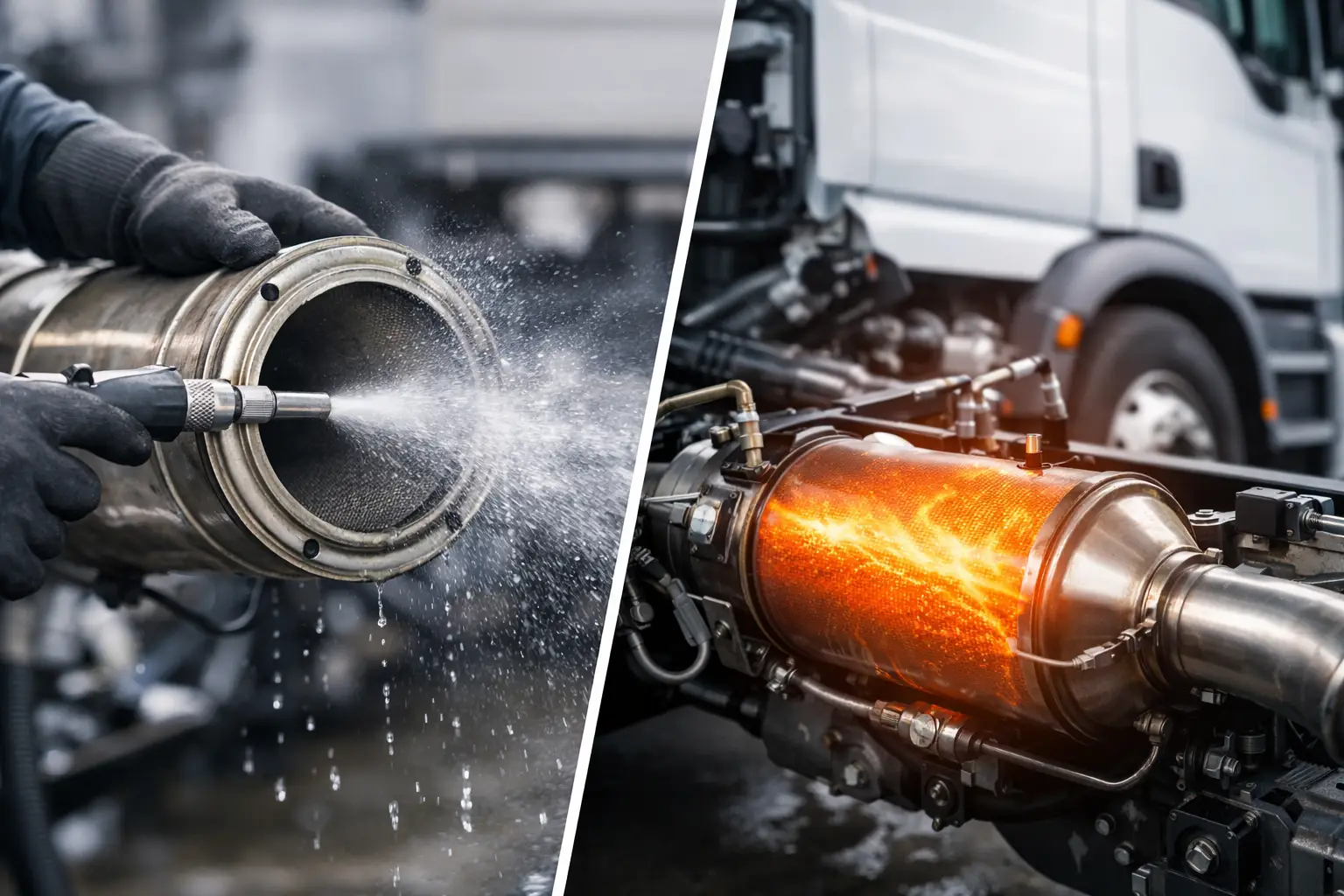
A DPF warning on the dash can turn a normal run into a missed delivery, a derate, or a truck parked on the shoulder. The real question behind DPF cleaning versus regeneration is not which option is better in every situation. It is which one addresses what is actually blocking the exhaust system before the problem becomes a roadside shutdown.
Regeneration is part of normal diesel operation. Cleaning is corrective maintenance for material regeneration cannot remove. Knowing the difference helps drivers and fleet managers make better calls when soot load rises, warning lights appear, or an engine starts losing power on a route through San Antonio or the I-35 corridor.
DPF Cleaning Versus Regeneration: The Core Difference
A diesel particulate filter, or DPF, captures soot produced during combustion. That soot cannot stay in the filter indefinitely. The engine and emissions system must burn it off through regeneration to keep exhaust flow within specification.
Regeneration burns soot into a much smaller amount of ash. It does not make the filter empty. Ash is the non-combustible residue left behind from engine oil additives, fuel additives, and normal combustion byproducts. Because ash will not burn away, it accumulates over time and eventually reduces the usable capacity of the DPF.
That is the dividing line. A regeneration handles soot loading when the system is otherwise healthy. DPF cleaning removes accumulated ash and other deposits when the filter is restricted beyond what a regen can correct.
A forced or parked regen may clear a warning caused by excessive soot. It will not repair a failed sensor, an exhaust leak, a dosing problem, poor engine combustion, or an ash-loaded filter. Repeatedly forcing regens without identifying the cause can waste fuel, increase heat stress on emissions components, and leave the truck vulnerable to another fault shortly afterward.
What Happens During DPF Regeneration
Most late-model commercial diesels perform active regeneration automatically when operating conditions allow it. The engine control module monitors soot load, exhaust temperature, differential pressure, engine speed, vehicle use, and other data. When the system determines that the filter needs cleaning, it raises exhaust temperature high enough to oxidize trapped soot.
On highway runs with consistent load and speed, passive regeneration may occur naturally. Exhaust temperatures remain high enough for soot reduction without major intervention. This is one reason trucks working long, steady routes often have fewer DPF interruptions than units that spend their days idling, making short runs, or working stop-and-go local routes.
A parked regen is different. It is a commanded stationary process used when automatic regeneration has not completed or when soot loading has reached a threshold that requires technician or operator intervention. The truck must be in a safe location, clear of dry grass, fuel vapors, freight materials, and anything affected by extreme exhaust heat. A parked regen can run hot and take significant time, so it is not a task to start casually at a crowded dock or roadside shoulder.
When Regeneration Is the Right First Move
A properly performed regen can be the right answer when diagnostics show a soot-loaded filter, exhaust temperatures can reach target levels, and the underlying emissions system is functioning correctly. It is often appropriate after extended idling, interrupted automatic regens, or operational patterns that never allow the engine to complete its normal cleaning cycle.
The key word is diagnostics. A technician should verify fault codes and live data before deciding that a forced regen is the fix. Differential pressure readings, exhaust gas temperature sensor values, NOx-related faults, DEF system operation, dosing performance, and calculated soot load all matter. A dashboard lamp tells the driver there is a problem. It does not identify the failed component or prove that the filter itself is the only issue.
When DPF Cleaning Is Necessary
Professional DPF cleaning becomes necessary when ash accumulation has reduced filter capacity or when physical contamination cannot be corrected through combustion. A filter can be loaded with ash even if the truck has completed regens regularly for years. In fact, a truck that appears to regen more frequently than it once did may be showing an early sign of reduced DPF capacity.
A true cleaning process removes the filter and uses specialized equipment to clear ash from the filter channels. The filter is inspected and tested before it goes back into service. This is different from pouring a chemical treatment into the fuel system or commanding another parked regen. Some products may have limited maintenance applications, but they do not replace a properly executed cleaning when ash loading is the real restriction.
Cleaning may also be required when the filter has been contaminated by oil, coolant, excessive fuel soot, or damaged internal substrate. Those situations require more than removing ash. Before reinstalling a cleaned or replacement filter, the source of contamination must be repaired. Otherwise, the same failure will quickly return.
Signs a Regen May No Longer Be Enough
Frequent regen requests, recurring DPF-related fault codes, reduced power, poor fuel economy, elevated exhaust backpressure, or a truck that derates soon after a regen all deserve attention. None of these symptoms automatically means the DPF needs cleaning, but they are strong reasons to stop guessing and perform shop-level diagnostics.
Another warning sign is a regen that will not initiate, will not complete, or ends with the same fault active. A failed temperature sensor can prevent the control module from seeing the heat it needs. A plugged doser, poor DEF quality, intake restrictions, turbocharger issues, EGR problems, or excessive crankcase oil consumption can also interfere with DPF operation.
For fleet managers, maintenance history matters. If a unit has high operating hours, extensive idle time, or a long record of DPF-related events, ash loading should be considered. Waiting until the vehicle reaches a severe derate puts the load, driver, and schedule at risk.
Why Forced Regens Sometimes Fail
A forced regen is not a universal reset button. The ECM may refuse to start one if critical fault codes are present, soot load is beyond the allowed threshold, fuel level is too low, or sensor readings do not make sense. That refusal is often a protective action, not a computer problem.
The system is designed to prevent excessive exhaust temperature when it cannot confirm safe operating conditions. Attempting to bypass that logic can create more damage than downtime. The correct approach is to identify why the regen was blocked, repair the fault, and then determine whether regeneration is still safe and appropriate.
Even a regen that completes can fail to solve the underlying restriction. If the filter is ash-loaded, soot may burn off but exhaust flow may remain limited. If the engine is producing excessive soot because of a combustion or air-handling issue, the freshly regenerated filter can load again quickly. The event completed, but the truck was not repaired.
Operational Habits That Protect the DPF
Drivers cannot eliminate DPF maintenance, but operating habits can reduce unnecessary interruptions. Avoid extended idle time when possible, follow the dash instructions when an active regen is underway, and do not repeatedly shut down the engine during a regen unless safety requires it. Interrupted cycles are a common reason soot loading escalates.
Maintenance also matters upstream of the filter. Use the correct engine oil specification, keep air and fuel filtration on schedule, address boost leaks and engine fault codes promptly, and avoid treating recurring warning lights as routine. The DPF is at the end of the exhaust process, so it often reveals problems that started elsewhere.
For fleets, tracking regeneration frequency is more useful than waiting for a hard fault. A unit that suddenly requires more frequent regens than similar trucks on the same work cycle deserves inspection before it becomes an after-hours breakdown.
Make the Call Based on Data, Not the Dash Light
The practical decision is straightforward: use regeneration when soot is the problem and the emissions system is healthy enough to complete the process safely. Use professional DPF cleaning when ash, contamination, or persistent restriction has exceeded what heat can remove. If fault codes or live readings point to a failed component, repair that cause first.
When a commercial truck is losing power, stuck in a derate, or refusing a parked regen, fast diagnosis matters more than trying the same command again. TX Road Service provides 24/7 mobile diesel diagnostics and DPF and regen support for working trucks across the San Antonio area and major surrounding corridors. A clear diagnosis gives the driver the next right move - complete the regen, correct the system fault, or schedule the cleaning the filter has reached the point of needing.