Air Compressor Failure Symptoms on a Truck
Recognize air compressor failure symptoms truck drivers cannot ignore, protect brake air pressure, and get fast mobile diesel diagnostics in San Antonio.
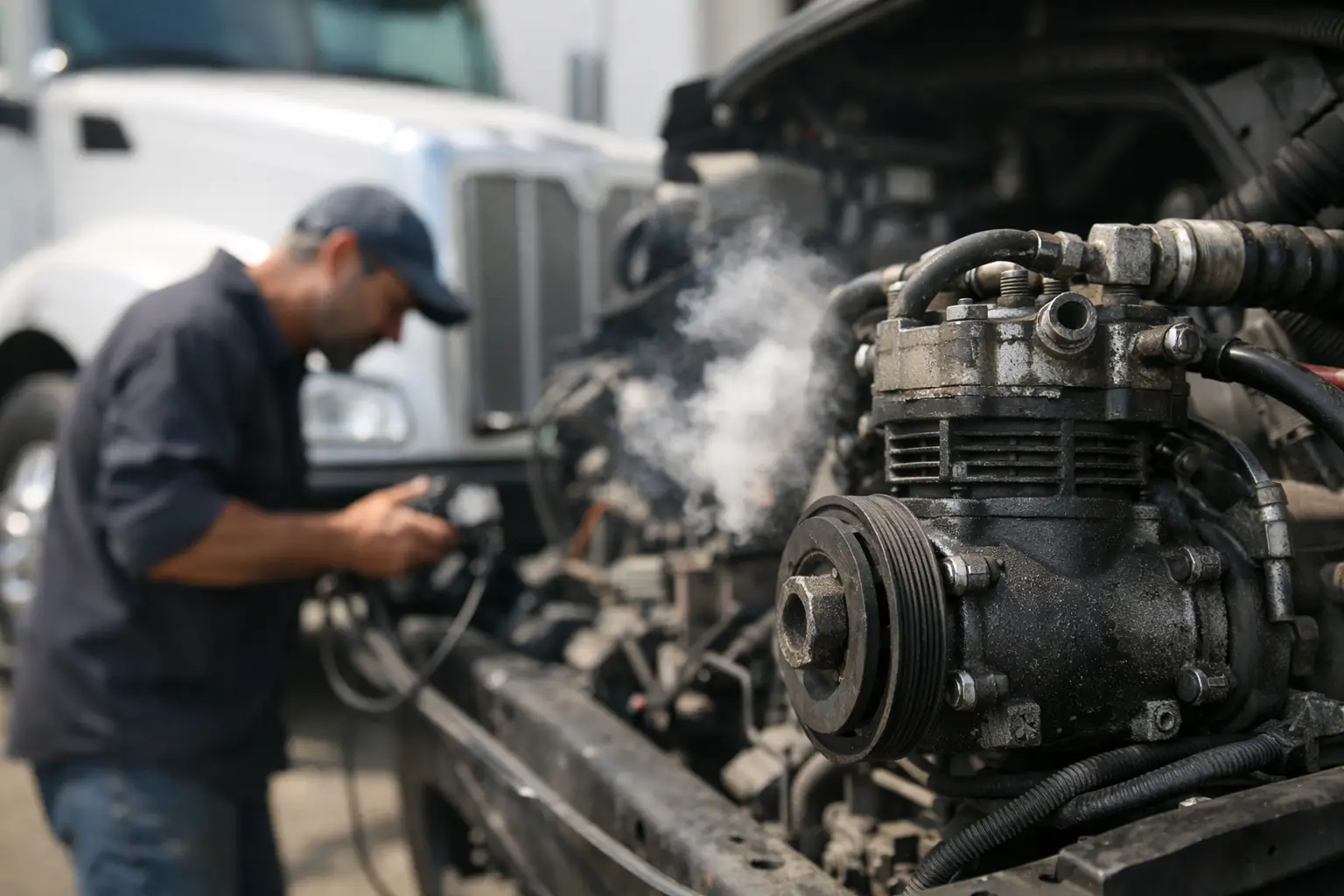
A low-air warning is not a light to watch until the next stop. On a commercial truck, air compressor failure symptoms truck drivers notice first can quickly become a brake-system problem, a missed delivery, or a DOT compliance interruption. When the system cannot build or maintain proper air pressure, the truck needs a real diagnosis before it is put back into service.
The engine-driven air compressor does more than fill tanks. It supports the air-brake system and may supply components such as suspension, cab accessories, and other air-operated equipment. A problem can originate in the compressor itself, but the same symptoms can also come from a governor, unloader valve, air dryer, air leak, or restriction. That is why guessing at the failed part is expensive and risky.
Air Compressor Failure Symptoms on a Truck
The clearest symptom is slow air-pressure buildup. After startup, a healthy system should build air efficiently and reach its normal operating range without excessive idling. If the gauges climb slowly, stall below normal pressure, or take far longer than usual to recover after brake applications, the compressor may not be producing enough volume.
A low-air warning buzzer or light is the next major red flag. If the warning remains on after the engine has run long enough for pressure to build, do not assume the sensor is wrong. Verify gauge readings and treat low air pressure as an active safety concern. A truck that cannot hold adequate pressure can have reduced brake-system readiness, and spring brakes may apply when system pressure falls too low.
Another common sign is frequent compressor cycling. The system builds pressure, reaches cut-out, then drops quickly and starts building again. That pattern often points to an air leak, but it can also involve a governor that is cutting in and out incorrectly or an unloader that is not operating as designed. The compressor may be working harder than it should, which accelerates wear and can lead to a full failure.
Oil contamination is also a serious clue. Excessive oil found in air tanks, air lines, or the dryer can indicate that the compressor is passing oil. A small amount of contamination may have accumulated over time, but heavy oil carryover can damage the air dryer, foul valves, and create problems throughout the air system. Replacing only the dryer without addressing the source can leave the truck with the same failure waiting down the road.
Pay attention to noise as well. Knocking, grinding, rattling, or a persistent air leak near the compressor can signal internal wear, damaged fittings, a failing discharge line, or a compressor mounting issue. Smoke or an overheated smell near the compressor and discharge plumbing needs immediate attention. The discharge side runs hot under normal operation, but abnormal heat can point to restricted flow, cooling problems, or a compressor that is being overworked.
What Slow Pressure Build Really Means
Slow buildup does not automatically mean the compressor has failed. The key question is whether the compressor is producing insufficient air or whether the truck is losing air as fast as it is being produced.
A large leak can mimic a weak compressor. Listen for escaping air around tanks, fittings, brake chambers, gladhand connections, valves, and air-suspension components. Some leaks are obvious; others only show under pressure or during a specific brake application. A technician may need to isolate circuits and monitor pressure loss to find the actual source.
The governor and unloader system also deserve attention. The governor tells the compressor when to load and unload. If it sticks, receives poor air supply, or is set incorrectly, the compressor may not build pressure correctly or may run continuously. An unloader problem can leave the compressor unable to pump effectively even when the compressor itself is mechanically sound.
Restricted discharge plumbing or a malfunctioning air dryer can create high temperatures and poor air delivery. In freezing or wet conditions, moisture-related restrictions can make the issue worse. On trucks with heavy oil contamination, the dryer and downstream components may need inspection after the root cause is repaired.
Symptoms That Mean Stop and Diagnose
A driver may notice a minor air leak and schedule it for the next maintenance window. But there are situations where continuing to operate is not the right call. Low-air warnings that do not clear, pressure that drops during normal brake use, or a truck that cannot build to normal governor cut-out need immediate attention.
Do not keep idling the truck for an extended period hoping the pressure will eventually come up. If it takes an unusual amount of time to build air, the compressor may be overheating while the underlying leak or restriction remains unresolved. That can turn a repairable problem into damage across the air system.
If the truck loses pressure rapidly with the engine off, has obvious compressor noise, or applies spring brakes unexpectedly, secure the vehicle in a safe location and have the air system checked. Air-brake issues are not the place for temporary fixes or assumptions based on one gauge reading.
How a Proper Roadside Diagnosis Works
A competent diagnosis starts with the basic facts: current tank pressure, pressure buildup rate, governor cut-in and cut-out behavior, and how quickly pressure decays. The technician should inspect the compressor, discharge line, air dryer, tanks, fittings, and accessible valves rather than replacing the most visible part first.
The next step is identifying whether the problem is production, control, leakage, or contamination. If the compressor is not producing volume, internal wear, damaged valves, or a drive-related issue may be involved. If it produces air but pressure will not hold, leak testing and circuit isolation become the priority. If pressure behavior is erratic, the governor, unloader, dryer purge function, and related control lines need to be checked.
This distinction matters for fleets and owner-operators. A new compressor will not solve a major downstream leak. Likewise, sealing one fitting will not fix a compressor that is passing oil or failing internally. Shop-level diagnostics on the roadside reduce the chance of replacing parts without correcting the actual reason the truck lost air.
Preventing Compressor-Related Downtime
Air-system maintenance is less dramatic than a roadside failure, but it protects uptime. Drivers should make air-pressure buildup and leak checks part of the pre-trip routine, not just a reaction after a warning comes on. Changes in normal gauge behavior are often the first indication that a problem is developing.
Drain tanks according to the truck's maintenance requirements, especially if moisture is present or the dryer is not performing correctly. Watch for excessive oil, water, or debris. These are not cosmetic findings. They can reveal a failing compressor, dryer issue, or neglected air-system service before brake valves and other components are affected.
Fleet maintenance teams should also track repeat air complaints. A truck that repeatedly needs air added, cycles constantly, or shows recurring dryer contamination may have one unresolved root cause. Repairing the pattern is more productive than treating each event as a separate minor issue.
When a truck is parked on I-35, I-10, I-37, or around San Antonio with low pressure or suspected compressor trouble, accurate diagnosis matters more than a quick guess. TX Road Service provides 24/7 mobile diesel roadside support to identify the fault, address the repair where conditions allow, and help get commercial equipment back to safe operating condition. The best time to act is when the gauges first stop behaving normally, not after the truck can no longer build air.